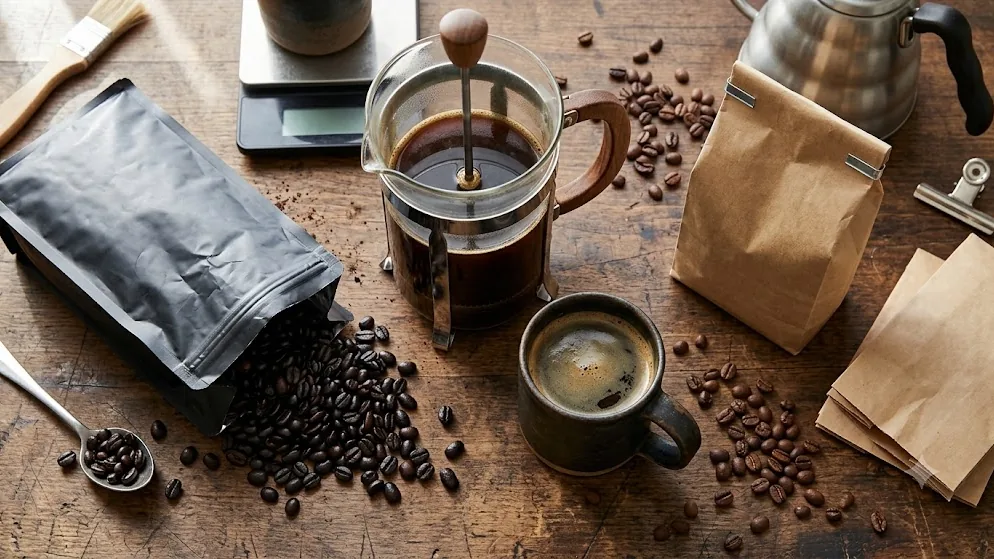
Kevin Gates coffee sells as a vacuum-sealed “brick” of ground beans called The General’s Ritual, sold as a pack through the artist’s own storefront. That single fact answers most of what people actually type into a search bar, but almost no page pulls the story, the product spec, and the caffeine question into one place.
The official Shopify listing gives you numbers with no context. The fan clips give you buzz with no numbers. The current top three search results are 100% commercial or social pages, with none of them doing the full editorial job of tying the story to the facts. What follows fills that gap, section by section, starting with the quick answer and working down into brewing, pricing math, and the safety numbers that no product page mentions.
The product ships from A Coffee Called Folks, a brand co-founded by branding innovator Brent Rollins and hip-hop tastemaker Josh Levine, and marketed since day one as the first coffee brand born from hip-hop culture. The launch was announced on 22 November 2024 out of Los Angeles, California.
The blend leans on beans from Colombia, Brazil, and Guatemala, roasted to a medium profile with stated notes of chocolate, nuts, and orange zest. Every fact in this article traces back to either the official storefront, the artist’s own site, the launch press coverage, or a recognized health authority, so you can verify any number independently.
Quick answer: the brick, the price, and the caffeine ceiling
Kevin Gates coffee is The General’s Ritual, a vacuum-sealed brick of pre-ground medium-roast beans sold by A Coffee Called Folks, the brand co-founded by Brent Rollins and Josh Levine. It blends Colombia, Brazil, and Guatemala beans, with chocolate, nut, and orange-zest notes.
If you drink it daily, the U.S. Food and Drug Administration publishes guidance on caffeine intake levels not tied to negative effects for most adults. Pregnant drinkers and children sit below that line. That is the entire product in one paragraph; everything below it is the detail behind each of those five facts, plus the parts no listing covers: brewing method, price math, and how it stacks against a plain specialty bag.
The General’s Ritual decoded: bean origin, roast, and the tasting notes on the pack
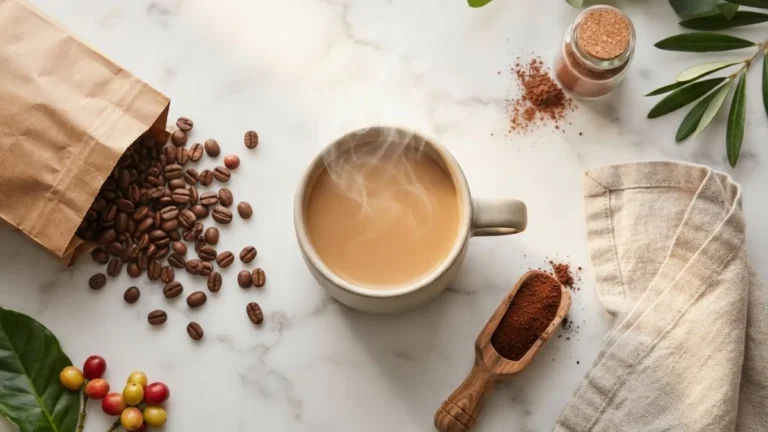
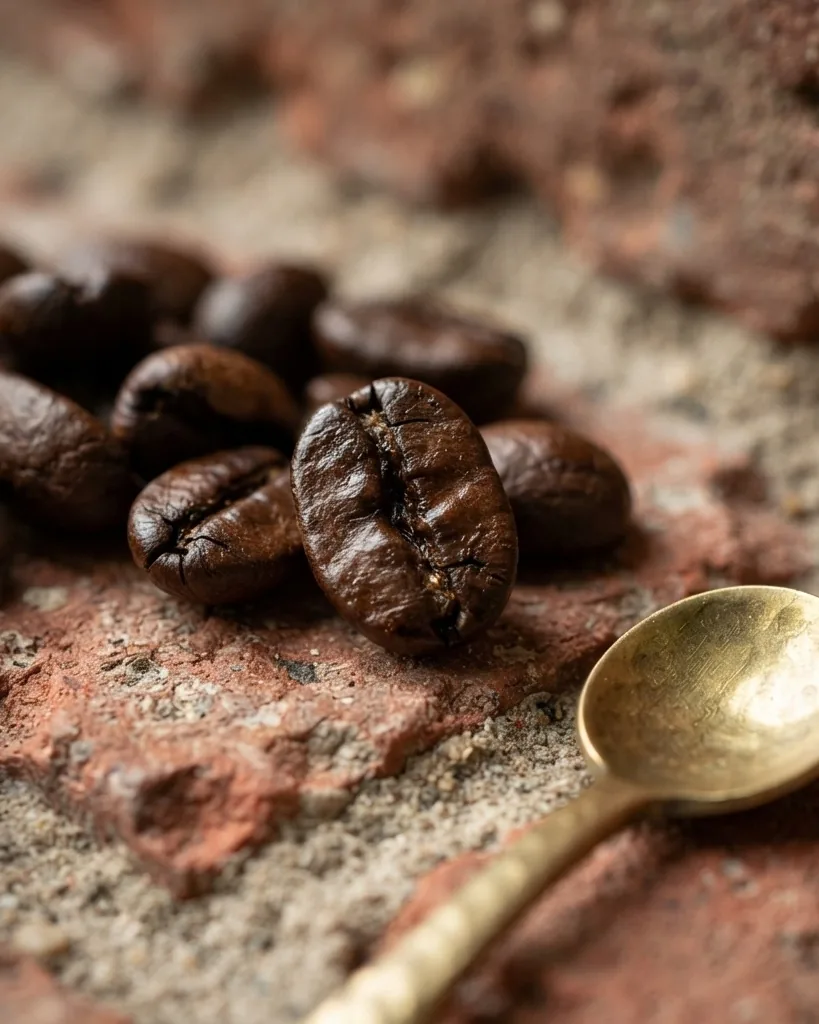
The General’s Ritual is a medium-roast blend built from three Latin American origins: Colombia, Brazil, and Guatemala. The pack lists chocolate, nut, and orange-zest notes, a profile that reads as approachable rather than experimental. It ships as a 10 oz (0.28 kg) brick, ground and vacuum-sealed, so the buyer does no grinding.
That single choice defines the entire brewing experience before you open the bag, and it is the detail the storefront glosses over. Medium roast is the sweet spot here for a reason. Push a Colombia-Brazil-Guatemala blend darker and the orange-zest brightness collapses into generic bitterness.
Pull it lighter and the chocolate body thins out. Medium keeps both, which is why the roaster’s choice is not arbitrary marketing language but a real constraint on how the cup tastes. The vacuum seal matters more than the marketing copy admits.
Ground coffee stales fast once air hits it, so a sealed brick protects aroma in transit. The trade-off: once you open it, the clock starts. Pre-ground beans lose their volatile compounds within days, not weeks, which is a fundamentally different freshness window than whole beans stored properly.
- Origins: Colombia, Brazil, Guatemala blend, three distinct terroirs in one cup.
- Roast: medium, tuned to hold both chocolate weight and citrus lift.
- Format: 10 oz (0.28 kg), pre-ground, vacuum-sealed brick.
- Stated notes: chocolate, nuts, orange zest.
What Kevin Gates coffee costs, and how that stacks against specialty bags
A single General’s Ritual brick is priced like a standard specialty coffee purchase rather than a premium collectible. For an artist collaboration with a national profile, that positioning sits inside the range of independent specialty roasters rather than above it.
You are paying for a named blend and a story, not a novelty markup that ignores the coffee itself. The pricing tells you this is a real product, not a merch stunt. Context helps here. Plenty of single-origin specialty bags from the same three growing regions land in a similar price band per ounce once you account for weight.
Where the brick differs is format. You are locked into pre-ground coffee, which removes the grind-fresh advantage that justifies part of a specialty roaster’s premium. If two bags cost the same per ounce, the whole-bean one usually wins on aroma at the moment of brewing, simply because grinding releases volatile oils that begin degrading within minutes.
That does not make the pre-ground brick a worse purchase, only a different trade: you give up peak freshness at brew time in exchange for zero equipment and zero extra steps, which matters if you do not own a grinder or do not want one.
If you want to see how format and portion pricing play out elsewhere in the coffee world, our breakdown of what coffee flights cost and how big they are shows the same tension between novelty pricing and actual value in the cup.
The trade-offs to weigh before you buy:
- Brick price: priced per the official storefront listing.
- Per-ounce cost: varies with pack size, so check the current listing before comparing.
- Format penalty: pre-ground, so no fresh-grind aroma at brew time.
Where to buy the brick, and how to spot the official channels
The safest place to buy Kevin Gates coffee is the A Coffee Called Folks storefront, the primary source for the General’s Ritual brick and the only channel that confirms weight, origin, and roast in one listing. The artist’s own site cross-sells the same product under a “Get A Brick” call to action.
The brand runs an official Instagram account, @acoffeecalledfolks, with roughly 23,000 followers and 85 posts at the time of collection. Anything outside those channels deserves scrutiny before you enter card details, since a product with viral social reach tends to attract copycat listings.
The reason to care about channel is simple. Social feeds surface the product constantly, but resellers and lookalike listings do not guarantee the vacuum seal is intact or the roast date is recent. With pre-ground coffee, freshness is the whole game, and a broken seal or a stale roast date defeats the entire point of buying a named, curated blend.
Treat any listing that omits the stated weight, the three-origin blend, or the official anchor price as a red flag. The official storefront states all three plainly. Before ordering internationally, check whether the seller ships pre-ground coffee across borders at all, since customs handling of food products varies by destination and some countries restrict imported ground coffee more tightly than whole bean shipments.
If you are buying as a gift, factor in shipping time against the freshness window. A brick that sits in transit for two weeks before it even reaches the recipient has already burned through a meaningful chunk of its peak aroma life, so ordering closer to when it will actually be brewed matters more with this format than with whole-bean coffee.
Why “General” and “Brick”: the naming, the persona, and the meme
The naming is not random. Kevin Gates carries a public persona built around discipline and ritual, and The General’s Ritual leans directly into that. The “brick” format reframes a coffee bag as something weightier, a deliberate nod to the artist’s world rather than a generic pouch.
The marketing copy sells “the habit you won’t wanna quit,” turning Gates’s well-documented coffee habit into the product’s entire pitch. A Coffee Called Folks frames the whole line as rap entering premium coffee for the first time, which is a bigger claim than most artist merchandise attempts.
That framing does real work. The launch positioned A Coffee Called Folks as the first coffee brand born from hip-hop culture, a claim that gives the product a category to lead rather than a shelf to crowd into. Brent Rollins and Josh Levine built the branding around culture first, coffee second.
That ordering shows up in every piece of copy: the product name references a persona before it references a growing region, and the packaging language leans on ritual and habit rather than tasting-note jargon that specialty roasters usually lead with.
The “addiction” language is a marketing wink, not a health claim, which is exactly why the caffeine facts below matter. A joke about not being able to quit coffee reads very differently once you attach an actual daily milligram ceiling to it, and that is the section most competing pages skip entirely.
How to brew a pre-ground brick without wasting it
Because The General’s Ritual arrives pre-ground, your brewing options are set by the grind size in the bag, not by your grinder. A medium grind suits drip machines, pour-over cones, and standard automatic brewers, which is almost certainly what the brick targets.
You cannot dial it coarser for a French press or finer for espresso without a burr grinder to re-process, and re-grinding pre-ground coffee gives inconsistent results because the particle sizes are already uneven from the first grind. Match your method to the grind you were given rather than fighting it.
Start with a standard ratio and adjust by taste, since medium-roast blends with orange-zest brightness turn sour when under-extracted and flat when over-extracted. Water just off the boil, a clean filter, and a fresh pour beat any gadget. A rough starting point is one to two tablespoons of grounds per six ounces of water, then adjust up or down after the first cup.
If the cup tastes thin and sour, you likely under-extracted; use slightly more grounds or a longer contact time. If it tastes bitter and flat, you likely over-extracted; pull back on grounds or shorten the brew time. Because this is pre-ground and you cannot change particle size, these two levers, dose and time, are your only real controls.
A few method notes that protect the cup:
- Drip or pour-over: the natural home for a medium pre-ground brick.
- French press: risky, since the grind is likely too fine and will over-extract and silt the cup.
- Espresso: not viable from pre-ground drip coffee without re-grinding.
- Cold brew: possible but slower to extract with a finer grind, so expect a weaker concentrate than a coarse cold-brew grind would give.
- Storage: reseal tight after opening, since ground coffee stales within days.
If you plan to portion the brick and seal it down for later, the mechanics and legal limits of that are covered in our guide to using a can sealer machine for coffee, which gets specific about seam specs and freshness.
Caffeine and safety: the FDA and Mayo Clinic numbers that belong on every coffee page
Caffeine safety is the one thing no Kevin Gates coffee listing addresses, and it is the part that matters if the brick becomes a daily habit. The U.S. Food and Drug Administration publishes a daily caffeine guidance level not associated with negative effects for most healthy adults, which works out to roughly 2 to 3 cups of coffee at 12 oz each.
That is the guidance to anchor your intake against. The General’s Ritual is a standard caffeinated coffee, so the same ceiling applies to it as to any medium roast; there is nothing in the product description suggesting an unusually high or low caffeine content relative to typical medium-roast blends.
The bodies that govern this space each play a distinct role, and knowing which one to trust for which question saves you from folklore. The Food and Drug Administration sets consumer-facing caffeine guidance and regulates food safety across the United States. Its consumer update, Spilling the Beans: How Much Caffeine Is Too Much, is the plain-language reference for that guidance.
The Food and Drug Administration also runs a separate, sharper warning on pure and highly concentrated caffeine products, the ones tied to overdose risk. Its page on pure and highly concentrated caffeine is worth reading if anyone in your house keeps caffeine powders or pills, because a brewed coffee brick and a caffeine supplement are not the same risk class.
A cup of brewed coffee delivers caffeine slowly and in a dilute, self-limiting way; a teaspoon of pure powdered caffeine can deliver a lethal dose in a single measurement error. Confusing the two risk categories is exactly the mistake the FDA’s separate warning exists to prevent.
The Mayo Clinic, a reference medical institution, publishes its own caffeine thresholds and lands near the same guidance in its in-depth caffeine guide. When a regulator and an independent hospital converge on the same ceiling, that is the signal to trust the guidance rather than the marketing.
Where the “for most adults” caveat bites hardest:
- Pregnancy: guidance sits well below the general 400 mg adult ceiling; talk to a clinician about your specific limit.
- Children and adolescents: caffeine is not recommended in the same amounts, and the adult figure does not apply.
- Caffeine sensitivity: people who metabolize caffeine slowly may feel effects well under 400 mg.
- Combined sources: coffee, tea, energy drinks, and some medications all add to the same daily total, so a single brick-brewed cup rarely stands alone in someone’s actual intake.
None of this makes the brick unsafe. It makes it ordinary caffeinated coffee, which means the ordinary rules apply. The marketing calls it an “addiction” as a joke; the FDA and Mayo Clinic guidance is the part that is not a joke, and it is the same guidance that would apply to any other medium-roast coffee you might buy instead.
How the brick reads next to a plain specialty bag from the same origins
Set The General’s Ritual beside a standard specialty bag built from Colombia, Brazil, and Guatemala beans and the differences are mostly format and story, not raw quality. Both draw on the same respected growing regions, so the raw material is not where the two products diverge.
The brick trades fresh-grind flexibility for convenience and a named collaboration, while a whole-bean specialty bag trades the story for grind-at-home aroma. Priced like coffee rather than like memorabilia, the Gates blend earns the fairest thing you can say about a celebrity product.
The honest verdict: if you already grind fresh and chase single-origin nuance, the pre-ground format is a step down from your routine, since you lose the ability to tune grind size to your brewing method. If you want a solid daily medium roast with a story you actually like, the brick delivers on its stated notes without asking you to own or learn a grinder.
What tips the decision:
- Choose the brick if: you brew drip or pour-over, want convenience, and value the collaboration.
- Choose whole-bean specialty if: you grind fresh and prioritize aroma and control over story.
- Either way: the origins are comparable, so the gap is format, not bean pedigree.
Common questions people get wrong before buying
A few misconceptions come up often enough with this product to address directly. First, the brick is not decaffeinated; nothing in the official product listing indicates a decaf option, so treat it as standard caffeinated coffee subject to the same daily limits as any other brewed cup.
Second, the “brick” naming does not mean an unusually large or dense package; it is a normal-sized bag of ground coffee, and the name refers to the persona and packaging concept rather than an oversized product.
Third, buying through the artist’s own site and buying through the A Coffee Called Folks storefront both lead to the same official product; the artist page functions as a cross-sell rather than a separate product line, so you are not missing out by ordering from either official channel.
Frequently asked questions about Kevin Gates coffee
How much does the Kevin Gates coffee brick cost?
The General’s Ritual brick is sold as a pack of pre-ground, vacuum-sealed medium-roast coffee through A Coffee Called Folks. Prices and promotions can shift, so confirm the current figure on the official storefront before ordering, especially for multi-brick bundles.
Is Kevin Gates coffee sold as beans or ground?
The General’s Ritual ships ground, not as whole beans. The brick arrives pre-ground and vacuum-sealed, aimed at drip machines and pour-over brewing. That means no grinder is required, but you also lose the option to dial grind size for espresso or French press. Reseal it tightly after opening, since ground coffee loses aroma within days.
How much caffeine can I safely drink from a daily coffee habit?
The U.S. Food and Drug Administration publishes guidance on caffeine intake levels not associated with negative effects for most healthy adults, roughly the amount in 2 to 3 cups of 12 oz coffee. The Mayo Clinic publishes similar guidance. Pregnant drinkers, children, and caffeine-sensitive people should stay below that ceiling and check individual guidance with a clinician.
Who makes Kevin Gates coffee and when did it launch?
The General’s Ritual comes from A Coffee Called Folks, co-founded by branding innovator Brent Rollins and hip-hop tastemaker Josh Levine. The collaboration was announced on 22 November 2024 out of Los Angeles, California, and marketed as the first coffee brand born from hip-hop culture. The blend uses Colombia, Brazil, and Guatemala beans in a medium roast.
What does The General’s Ritual taste like?
The official listing describes chocolate, nut, and orange-zest notes over a medium roast built from Colombia, Brazil, and Guatemala beans. That combination reads as balanced rather than intense: the chocolate and nut notes carry the body, while the orange zest adds brightness without pushing into a sharp or acidic cup, consistent with a deliberately medium, not dark, roast level.
Can I drink this coffee after dental work?
Hot coffee is generally discouraged right after oral surgery because heat and suction can disturb healing. Timelines vary by procedure, so it is worth checking a proper recovery timeline rather than guessing. Our guide on drinking coffee after wisdom teeth removal by procedure type breaks down when it is reasonable to resume and why the first days matter most.
Caffeine intake and its effects can be a sensitive subject, especially during pregnancy or for anyone managing a health condition. If you have personal concerns about your own caffeine use, a doctor or registered clinician can give guidance tuned to your situation. The figures above are general references from the FDA and Mayo Clinic, not medical advice for any single person.