Can I have iced coffee after tooth extraction is the question people ask because iced coffee is cold, and cold feels safe on a sore socket. That instinct is half right. Temperature is the one part iced coffee gets a pass on. The straw, the caffeine, the acidity, and the sugar are where the trouble hides, and most people never separate those four things from the ice in the cup.
The socket left behind after a tooth comes out fills with a blood clot within hours. That clot is not a nuisance to be rinsed away. It is the scaffold your body builds bone and gum over. Disturb it early and you expose bone and nerve endings to air, food, and liquid, which is the condition dentists call dry socket. Iced coffee threatens that clot in ways that have nothing to do with how cold it is.
Quick answer: can I have iced coffee after tooth extraction
Yes, but wait past the first 24 hours, sip it slowly, and never use a straw. Iced coffee satisfies the cold-drinks-only rule surgeons give for the first day, so temperature is not your problem. The straw is. Suction can pull the protective clot out of the socket, and that is the single biggest iced-coffee-specific risk. Caffeine, acidity, and sugar add smaller concerns on top. Most guidance points to gentle, straw-free sips from around the second or third day, but your own dentist sets the timeline for your mouth.
The straw is the real danger, not the ice in the cup
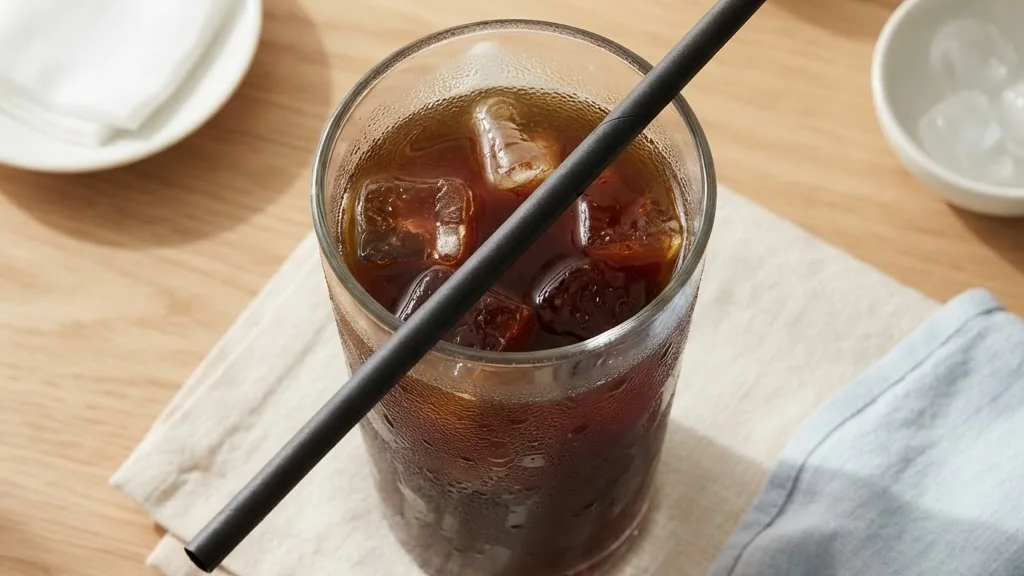
The straw is the thing that turns an ordinary cold drink into a clot-dislodging risk, and it is the detail iced-coffee articles most often skip. When you draw liquid up a straw, you create negative pressure inside your mouth. That suction acts directly on the fresh socket and can lift the clot out of place. The American Dental Association advises avoiding drinking through a straw for a full 24 hours after an extraction for exactly this reason. Ice never touches the clot the way suction does. You can drink a cold beverage without harm and still ruin the site the moment you sip it through a plastic tube.
- Suction from a straw pulls at the socket clot mechanically, which is why the no-straw window exists.
- Vigorous swishing, spitting, and smoking create the same kind of pressure disturbance.
- Cold liquid on its own does not dislodge a clot; the delivery method does.
Think of the clot as a plug in a drain. Cold water sitting on top of the plug does nothing. Put a shop vacuum over it and the plug comes loose. The straw is the shop vacuum. Skip it entirely, tilt the cup, and let the drink reach your lips without any pull, and you have neutralized the biggest hazard iced coffee carries. If you have a bagged or canned cold brew, the temptation to sip through a straw is even stronger, and worth resisting.

Cold passes the temperature test that hot coffee fails
Cold is the one thing iced coffee gets completely right after an extraction. Post-operative instructions from Dartmouth Health maxillofacial surgery tell patients to drink only cold drinks and no hot drinks for the first 24 hours after an extraction. Heat encourages the small vessels around the wound to open and can restart bleeding or soften a young clot before it has stabilized. Iced coffee, by definition, does the opposite. The chill is mild, steady, and applied to the surface rather than forced into the socket. That is why the temperature question, which worries so many people, is the least of their problems.
This is where the popular assumption falls apart. People reason that hot coffee is off-limits, iced coffee is cold, therefore iced coffee is fine. The temperature logic is sound. The conclusion is not, because the drink carries three other liabilities the ice does nothing to fix.
If you are weighing the hot-versus-cold question more broadly, the timeline shifts by preparation method, and it is worth reading our full breakdown of when it is safe to drink coffee after tooth extraction before you pour anything. Hot brews reintroduce the temperature risk that iced versions sidestep, which is why the safe day for a latte is not the safe day for a cold brew.
Caffeine, acidity and sugar: the three quiet risks iced coffee adds
Once temperature is off the table, iced coffee still fails on three counts that get far less attention than they deserve. Caffeine is commonly advised against in the early post-extraction window because dental practices say it can affect bleeding and blood pressure. Be honest about the strength of that claim: it is widely repeated, but no major health authority quantifies a caffeine-and-bleeding effect after extraction, so treat it as cautious practice advice rather than established fact. Acidity is the second. Coffee is acidic and can irritate an open wound, though the exact pH figures that circulate online trace back to practice blogs, not to any health authority, so no reliable number belongs here.
Sugar is the third and the most concrete. An open socket is an unhealed wound, and the sugar in a sweetened iced coffee feeds the bacteria already living in your mouth. That is a straightforward infection-risk argument that does not depend on any contested figure. If you must have iced coffee, unsweetened is the smarter pour.
- Caffeine: commonly advised against early, but not backed by a quantified authority source. Reasonable to limit, not proven to harm.
- Acidity: coffee is acidic and can irritate the site; the specific pH claims online are not authority-backed.
- Sugar: feeds bacteria at an open wound. The clearest reason to drink it unsweetened while you heal.
So the honest scorecard reads: iced coffee passes on one count, temperature, and fails on three, the straw, the caffeine, and the sugar, with acidity as a soft fourth. That framing is more useful than a flat “wait three days” because it tells you which levers you actually control. You can drop the straw. You can skip the sugar. You cannot make the drink less acidic, but you can dilute it and keep the exposure short.

How to drink iced coffee more safely if you refuse to wait
If you are going to drink iced coffee before you are fully healed, a handful of specific habits cut the risk to a manageable level. The single most important rule is no straw, because straw suction is the mechanical action most likely to pull the clot loose. After that, everything is about keeping the exposure gentle, brief, and away from the wound itself. None of this makes early iced coffee risk-free, and none of it overrides what your surgeon told you, but it separates a careful sip from a careless one.
- Drink from the opposite side of your mouth from the extraction so liquid does not pool over the socket.
- Take small sips rather than long pulls, which reduces how much pressure and liquid the site sees at once.
- Dilute it, or pour it over more ice, so the acid and caffeine hit a wound less concentrated.
- Skip the sugar and flavored syrups entirely while the socket is open.
- Wait until you are clearly past the first 24 hours, and longer if you had a surgical extraction.
Notice that these are damage-limitation tactics, not a green light. The safest choice is still to wait, and coffee lovers underestimate how much caffeine they take in across a day without thinking about it. If you are curious how quickly your habit adds up, our look at one high-volume daily coffee ritual and its real caffeine math puts the numbers in perspective. Cutting back for a few days of healing is a smaller sacrifice than it feels like in the moment.

Simple extraction versus impacted wisdom tooth: two different clocks
The type of extraction you had changes the timeline more than any other factor, and almost no iced-coffee guide separates the two. A simple extraction, where a fully erupted tooth is loosened and lifted out, leaves a smaller wound that clots and stabilizes relatively quickly. A surgical extraction, especially an impacted wisdom tooth that had to be cut from the bone and gum, leaves a larger cavity, more disturbed tissue, and a longer window in which the clot is vulnerable. Treating both the same way, as the exact-match competitors do, gives wisdom-tooth patients false confidence and pushes them toward iced coffee sooner than their healing supports.
Dry socket, the complication all of this is trying to prevent, occurs in about 1 in 20 tooth extractions, roughly 5 percent overall, according to healthdirect, the Australian government health service. That baseline rate climbs with impacted lower wisdom teeth, so the surgical patient starts from a higher risk and should hold to a longer caution window. Practically, that means a simple extraction might tolerate a gentle, straw-free iced coffee from around the second or third day, while an impacted-wisdom-tooth patient is wise to wait longer and lean harder on the safe alternatives.
No health authority publishes a coffee-specific timeline, so anyone quoting an exact “day three” number is extrapolating from clot-protection guidance, not citing a study. For a procedure-by-procedure view of the caffeine question specifically, our guide to the honest coffee timeline after wisdom teeth removal by procedure type walks through how surgical difficulty stretches the wait. The blunt takeaway: the harder the extraction, the longer you defer the drink.
Dry socket red flags: how to know you already caused a problem
Knowing the symptoms of dry socket matters as much as knowing how to avoid it, because early recognition gets you treated fast. Dry socket happens when the blood clot dissolves, is dislodged, or never forms, leaving bone and nerve endings exposed, as the Cleveland Clinic describes it. The pain is not the ordinary soreness of the first day. According to healthdirect, dry-socket pain typically begins 1 to 3 days after the extraction and can radiate to the ear or the eye on the same side. That delayed, spreading, throbbing pain is the classic warning sign, and it usually arrives after the initial post-op discomfort had already started to fade.
Call your dentist or oral surgeon if you notice any of the following:
- Severe, throbbing pain starting 1 to 3 days out that radiates toward the ear, eye, or temple on the extraction side.
- A bad taste or foul odor coming from the socket.
- An empty-looking socket where you can see exposed bone instead of a dark clot.
- Pain that gets worse rather than better after the first couple of days.
The reassuring part: alveolar osteitis, the clinical name for dry socket, is self-limiting with an excellent prognosis, and StatPearls from the NIH National Center for Biotechnology Information notes that with treatment it resolves within days and causes no long-term problems. Your dentist can clean the socket and pack it with a medicated dressing that eases the pain quickly. It is miserable while it lasts, but it does not leave lasting damage. That is why the correct response to these symptoms is a phone call, not panic.

What to drink instead while you wait out the clot
The waiting period is short and there are plenty of drinks that carry none of iced coffee’s baggage. The goal during the first day or two is to stay hydrated and comfortable without applying heat, suction, sugar, or acid to the socket. Cool water is the obvious choice and does the job better than anything. Beyond that, mild and non-acidic is the rule of thumb, sipped straight from a cup or bottle rather than through a straw. Smoking is a separate hazard entirely; NHS guidance is not to smoke for 24 to 48 hours after an extraction because it increases the risk of dry socket, and the same suction-and-chemical logic applies to vaping.
- Cool or room-temperature water, the safest and most hydrating option.
- Milk or plant-based milk, which is gentle and adds some calories if eating is hard.
- Lukewarm, non-citrus drinks once you are past the cold-only first day.
- Broth, which is soothing and easy when chewing is uncomfortable.
If it is the cold-and-refreshing quality of iced coffee you are missing rather than the caffeine, a decaf cold brew, unsweetened and sipped from the cup, removes the caffeine concern while keeping the temperature benefit. For a broader sense of how much variety exists in the cold-drink world, our roundup of what a coffee flight includes and what it costs is a fun read for the day you are cleared to enjoy coffee properly again.
Permits, food safety and the authorities behind the aftercare advice
The aftercare rules in this article are not invented; they come from named public-health and dental bodies, and it helps to know who governs what. The American Dental Association is the U.S. national dental body, and its consumer guidance is where the 24-hour no-straw rule and the warnings against vigorous rinsing originate. The Food and Drug Administration governs how the coffee and additives you drink are labeled and regulated as food, which is the framework under which caffeine content and ingredient disclosure fall. The Centers for Disease Control and Prevention shapes broader infection-control practice that informs why an open wound and sugar are a poor mix.
Cleveland Clinic and Mayo Clinic, both U.S. academic medical centers, publish the clinical descriptions of dry socket that dentists rely on when they explain the risk to patients. The American Association of Oral and Maxillofacial Surgeons speaks for the oral-surgery specialty on clot stability after extraction. On the government-service side, healthdirect provides the Australian consumer-health figures cited above, and the National Health Service in the United Kingdom issues the aftercare leaflets that give the 24-to-48-hour no-smoking window. This is a Your Money or Your Life health topic, which is exactly the kind of subject where sourced claims matter more than confident assertions.
None of these bodies charge the patient directly for this guidance, but the compliance layer is real for practices. A dental office operates under state licensing, sterilization and infection-control standards, and food-safety rules where it serves anything, and those obligations are the reason your post-op sheet reads the way it does. The practical cost to you is simpler: follow the instructions your own dentist hands you, because they are written for your specific extraction. For the record, no major authority publishes a coffee-specific number, so any “iced coffee on day X” claim is practice-derived guidance, not a rule from the FDA, the NIH, or the ADA. When in doubt, ask the person who did the work in your mouth.
Frequently asked questions
Can I drink iced coffee 24 hours after tooth extraction?
Often yes for a simple extraction, if you skip the straw, keep the sugar out, and take small sips away from the socket. Cold satisfies the first-day temperature rule that surgeons give. Surgical or impacted-wisdom-tooth patients should wait longer, since dry socket occurs in about 1 in 20 extractions and that risk runs higher after difficult surgery. Your dentist’s instructions override any general timeline.
Why is a straw so dangerous after an extraction?
Drawing liquid up a straw creates suction inside your mouth, and that negative pressure can lift the protective blood clot out of the socket. The American Dental Association advises avoiding straws for 24 hours for this reason. It is the delivery method, not the drink, that poses the risk. Cold liquid sipped straight from a cup does not pull at the clot the way a straw does.
Is the caffeine in iced coffee actually harmful after an extraction?
Dental practices commonly advise limiting caffeine early, saying it may affect bleeding or blood pressure, but no major health authority quantifies that effect after extraction. Treat it as cautious advice rather than proven fact. The more concrete concerns are straw suction and the sugar in sweetened drinks feeding bacteria at the wound. If you want to be safe, unsweetened and straw-free matters more than the caffeine itself.
How do I know if I have dry socket?
Watch for severe, throbbing pain that begins 1 to 3 days after the extraction and radiates toward the ear or eye on the same side, per healthdirect. A bad taste, a foul odor, or a socket that looks empty with visible bone are further signs. Call your dentist. The Cleveland Clinic notes dry socket means the clot dissolved or dislodged, and it is treatable, so do not wait it out.
What can I drink instead of iced coffee while healing?
Cool water is the best choice for hydration and safety. Milk or plant milk works if eating is hard, and broth soothes when chewing hurts. Once past the cold-only first day, lukewarm non-citrus drinks are fine. Avoid smoking for 24 to 48 hours, as NHS guidance warns it raises dry-socket risk. Unsweetened decaf cold brew, sipped from a cup, is a reasonable middle ground.
Does hot coffee carry the same risk as iced coffee?
No, hot coffee adds a risk iced coffee avoids. Dartmouth Health post-op instructions tell patients to drink only cold drinks and no hot drinks for the first 24 hours, because heat can reopen small vessels and disturb a young clot. Iced coffee passes that temperature test. Its problems are the straw, caffeine, acidity, and sugar instead, so a cold version is generally the safer of the two early on.