Can I drink coffee after wisdom teeth removal is the question people type at 6am the morning after surgery, and the useful answer has a number in it: skip all hot drinks for the first 24 hours, then move to cool or lukewarm coffee from an open cup, never a straw, with the safest full return landing around day 3 to 7. That is the floor, not the ceiling. Your surgeon’s written post-op sheet overrides anything on a screen, because they saw your socket and a web page did not. The rest of this piece explains why the timeline shifts with the kind of extraction you had, and where the popular advice is simply wrong.
Quick answer. Wait out the first 24 hours with no hot drinks of any kind, per NHS inform guidance built around protecting the clot. After 24 hours, cool or lukewarm coffee in an open cup is reasonable for a simple upper extraction in a non-smoker. If you had a surgically sectioned lower impacted molar, or you smoke, hold cool-only through roughly day 3 to 5. The problem is heat and suction, not caffeine. Decaf does not solve the heat problem. Read your surgeon’s sheet first.
The straight answer, and the one line that overrides it
The safe move after wisdom teeth removal is no hot drinks for a full 24 hours, then cool or lukewarm coffee from an open cup with no straw and no swishing, easing back to warm around day 3 to 7. That single rule protects the blood clot sitting in the socket, which is the thing that actually determines whether you heal cleanly or land in a dentist’s chair with dry socket. NHS inform states plainly that for 24 hours you avoid rinsing, spitting, hot drinks, or anything else that could dislodge the clot, and only rinse gently with warm salt water after that mark passes.
One caveat trumps every number here. Your oral surgeon handed you a post-operative sheet, and that sheet was written for your mouth. If it says 48 hours, follow 48 hours. A generic timeline is a starting point for people who lost their sheet or never got a clear one.
If you want the deeper version of the underlying rule, our breakdown of the coffee timeline after any tooth extraction walks through the same clot logic for non-surgical cases, which is milder territory than third molars.
Timeline by extraction type: why one number fails most people
There is no single correct wait time because the risk is not uniform across procedures. A simple erupted upper tooth and a surgically sectioned lower impacted molar are different operations with different odds of complication, so they earn different coffee windows. The dominant risk marker is dry socket, formally alveolar osteitis, and its frequency swings hard with the type of extraction. Routine extractions sit near a 0.5% to 5% incidence per the StatPearls clinical reference, while surgically removed third molars have been reported as high as roughly 30%. Treating both cases with the same 24-hour rule under-protects exactly the patient most likely to be searching for help.
Here is the practical split, staged by day:
- 0 to 24 hours: No hot drinks at all, any extraction type. The clot is fresh and fragile. Sedation or general anaesthesia grogginess and nausea also make coffee a poor idea on day zero regardless of temperature.
- 24 to 72 hours: Cool or lukewarm coffee, open cup, no straw, no swishing, for lower-risk cases. This is the window where dry socket typically starts to show.
- Day 3 to 7: Gradual return to warm coffee as the socket settles. Dry socket most often presents between day 1 and day 5, so this is the stretch where you stay alert.
The variables that push you toward the cautious end: lower jaw beats upper jaw for risk, since mandibular molars carry the higher alveolar osteitis rate, and bone removal plus tooth sectioning plus a gum flap is the genuinely high-risk category. If that describes your operation, lean cool-only through day 3 to 5 rather than rushing back to a hot flat white at hour 25.

The three real mechanisms, ranked honestly by evidence
Coffee threatens a healing socket through three routes, and they are not equally supported by evidence, which matters because most pages lead with the weakest one. Ranked by strength: temperature comes first, suction second, acidity a distant and uncertain third. Heat is the clear villain. A hot liquid poured over a fresh clot delivers a thermal insult and drives vasodilation right where you need stable, undisturbed blood. Suction is next and it is about the drinking action rather than the drink itself. Acidity is plausible irritation, not a demonstrated clot-dissolving mechanism, and the caffeine molecule itself does very little locally.
Break the ranking down:
- Temperature (strongest). Heat plus vasodilation plus direct thermal contact with an open wound. This is the mechanism worth organising your whole plan around.
- Suction and pressure (strong). Straws, sipping through pursed lips, swishing, and forceful spitting all generate negative pressure that can pull the clot out. The Cleveland Clinic explicitly lists straw suction among dry-socket risk factors.
- Acidity (weak, uncertain). Coffee pH sits around 4.9 to 5.1. It may irritate, but no solid data show it dissolves a clot.
Then there is the claim that will not die: that caffeine dehydrates you and dehydration slows healing. It does not hold at normal intakes. A counterbalanced crossover trial published in PLOS ONE tracked 50 habitual male coffee drinkers who consumed 4 x 200 mL of coffee at 4 mg/kg caffeine daily for three days against the same volume of water, and across total body water, urinary, haematological and body-mass markers found no evidence of dehydration relative to water. The Mayo Clinic reaches the same conclusion on caffeine and hydration. Leading with dehydration is leading with the flimsiest argument on the table.

What “lukewarm” actually means, in real numbers
Use a hard ceiling you can actually reason about: 65 degrees Celsius, or 149 degrees Fahrenheit. That figure comes from the International Agency for Research on Cancer, which classified drinking very hot beverages above 65 degrees Celsius as probably carcinogenic to humans, Group 2A, and pinned the responsibility on temperature rather than the coffee itself. That is not a post-op rule, but it is the one authoritative “too hot” line you can anchor to, and for a raw socket you want to be comfortably under it, closer to body temperature.
Getting there without a thermometer is easy:
- Pour the coffee back and forth between two mugs a few times to shed heat fast.
- Splash in cold milk, which drops the temperature immediately.
- Use a wide, shallow mug so more surface area radiates heat.
- Drop an ice cube straight into a small hot brew if you do not mind slight dilution.
The rules do not change with the drink. Espresso, latte, flat white, and instant coffee are all governed by the same variable, temperature. Instant is not somehow safer; a scalding instant coffee is exactly as risky as a scalding pour-over. If you are experimenting with brew formats while you recover, keep the heat honest, and if you ever handle sealed or canned batches at home our notes on canned coffee seam specs and safety cover the storage side. For lower-temperature drink ideas generally, the roundup over at cold and iced drinks is a decent starting point once you are past the acute window.
Iced coffee and cold brew: safer, but not for the reason you have been told
Cold brew and iced coffee are a smart choice after wisdom teeth removal, but the popular reason for recommending them is factually wrong, and it is worth getting right because it changes how you use them. The claim circulating in top-ranked dental posts is that cold brew is “much less acidic” and therefore gentler on the socket. Measured data say otherwise. A study in Scientific Reports found the pH of hot-brew and cold-brew samples was comparable, ranging from 4.85 to 5.13, though hot-brew carried higher total titratable acids. Cold brew is not meaningfully less acidic. It is safer on temperature, full stop.
That distinction has a practical payoff. Since the benefit is temperature, not chemistry, you do not need to hunt for a special “low-acid” cold brew to protect your socket. Any cool coffee served at or near room temperature does the job. What still matters is how you drink it.
Skip the straw entirely on an iced coffee, because the suction risk is the same whether the liquid is hot or cold. Drink it from the front of your mouth from an open cup. If you are chasing safe cold formats, the plant-based crowd’s take on gentle chilled foods like these soft inari sushi bites is a reminder that texture matters as much as temperature in the first couple of days.
The caffeine angles nobody writing about this bothers to mention
The whole question gets reframed once you accept that the enemy is a hot liquid in an open socket, not caffeine itself, because caffeine has two effects around surgery that actually matter and that the popular pages ignore completely. The first is withdrawal. The second is pain relief. Neither has anything to do with the socket, and both change what you should do on the day of the operation. If you drink a lot of coffee and quit cold turkey on surgery morning, you are setting up a collision at the worst possible time.
Caffeine withdrawal, per the StatPearls reference on the subject, typically begins 12 to 24 hours after cessation, peaks at 20 to 51 hours, and lasts 2 to 9 days, with headache affecting around 50% of people and clinically significant impairment around 13%. Read that against the timeline: a heavy coffee drinker who stops on surgery day peaks in withdrawal at roughly the same hour they are anxiously scanning for post-op complications. That withdrawal headache gets misread as surgical pain or a developing problem. The fix is simple:
- Taper your coffee in the days before surgery rather than stopping abruptly.
- Or get your caffeine in a non-thermal, non-suction form during the acute window, meaning cool coffee from an open cup rather than none at all.
The second angle is genuinely useful. Caffeine works as an analgesic adjuvant. A Cochrane review of 20 studies and 7,238 participants, rated high-quality evidence, found that adding caffeine at 100 mg or more to a standard dose of a common analgesic increased the proportion of patients achieving good pain relief by an additional 5% to 10%. For scale, the FDA notes an 8-oz cup of coffee holds roughly 80 to 100 mg of caffeine, while decaf typically carries just 2 to 15 mg per 8-oz cup. So decaf solves the caffeine problem but is not a workaround for heat, and it also strips out the pain-relief bonus. Whether to combine caffeine with prescribed post-op painkillers is a question for your pharmacist or surgeon, not a self-experiment.
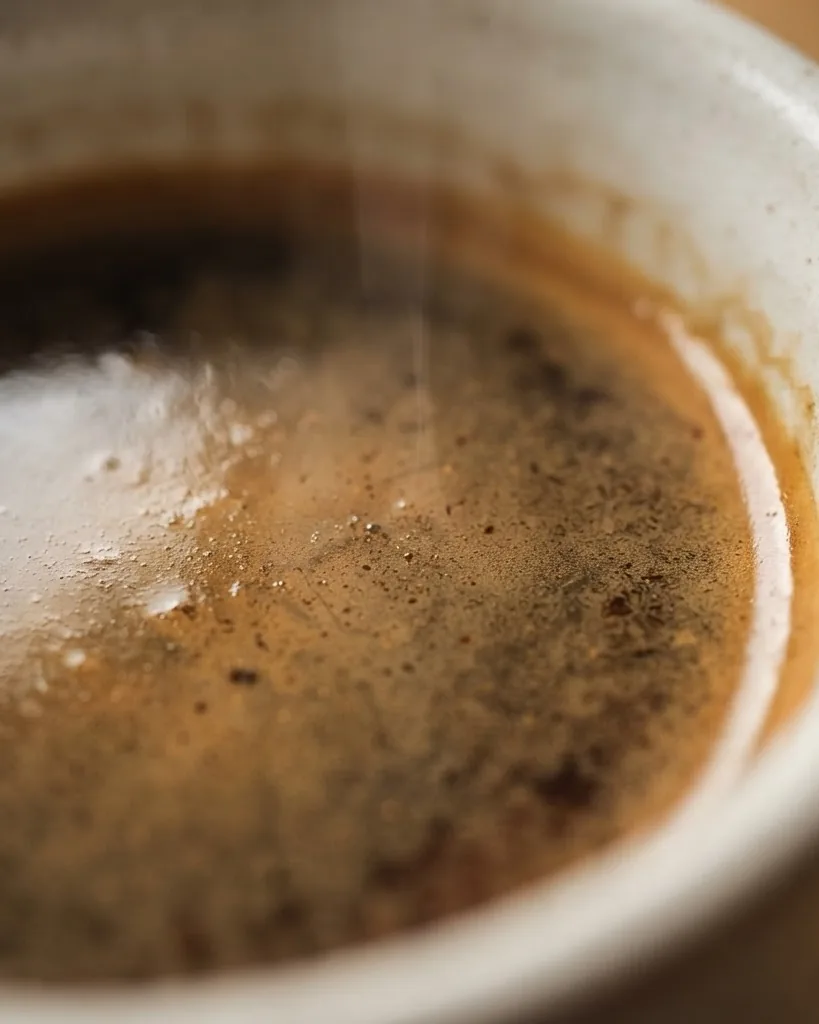
How to sip coffee without wrecking the clot
The drinking technique matters as much as the coffee, because suction and pooling are what pull a clot loose, so treat the first few days as a mechanics problem with a short checklist. This is the part that earns you the right to have coffee at all before you are fully healed, and it costs nothing but attention. AAOMS post-operative guidance is blunt on the supporting habits: avoid straws, use an ice pack intermittently for the first 48 to 72 hours, take extra care around the surgical site when brushing during the first 24 to 48 hours, and rinse with half a teaspoon of salt dissolved in a glass of warm water several times daily once you are cleared to rinse.
The sipping protocol itself:
- Open cup only, never a straw.
- Sip from the front of your mouth; do not swill liquid or hold it over the socket.
- Tilt your head away from the extraction side so gravity works for you.
- No swishing and no forceful spitting; if you rinse, let the water fall out over the sink.
- Skip sugar-heavy syrups early, since sludgy debris in a socket is asking for trouble.
- Warm salt-water rinses only once you are past the 24-hour mark.
For days 0 to 2, when even lukewarm coffee feels risky, lean on cool water, cool broth, milk, and non-acidic smoothies eaten from a spoon rather than sucked through a straw. Steer clear of carbonated drinks, alcohol, and anything very hot. If you want to keep your calories up while chewing is off the table, high-protein soft options like the ones in this high-protein recipe collection pair well with a spoon and a bit of patience. Later in the week, when gentle chewing comes back, something soft and forgiving like fresh pasta rolled out by hand is a kinder reintroduction than anything crunchy or crusty.
Risk-factor stacking: are you a 24-hour case or a day-5 case
The reason “how long” has no universal answer is that risk factors stack, and the same cup of coffee that is fine for one person threatens the socket of another because their odds of dry socket are multiples higher. Smoking is the dominant modifiable factor. A meta-analysis of 11 studies in Dentistry Journal found smokers had a more than three-fold increase in the odds of dry socket, with a pooled incidence of about 13.2% in smokers versus about 3.8% in non-smokers. The Cleveland Clinic states the same over-three-times figure and adds hormonal birth control with estrogen, poor oral hygiene, and straw suction to the list.
The rest of the stack, with numbers:
- Surgical extraction: odds ratio 3.27 versus simple extraction (95% CI 2.08 to 5.15, p less than 0.001) in a prospective study of 238 patients aged 18 to 40. In that same study dry socket prevalence climbed from 20.6% at 48 hours to 41.2% at two weeks.
- Prior dry socket: the strongest single predictor of recurrence, with an adjusted odds ratio of 11.45 (95% CI 1.06 to 123.74, p=0.045). Mandibular location, poor oral hygiene, and difficult extraction were also significant.
- Baseline reference: Healthdirect, the Australian government service, puts dry socket at roughly 1 in 20 extractions overall.
Sort yourself honestly. A non-smoker with a simple erupted upper tooth and no prior dry socket is a lower-risk case who can move to cool coffee at the 24-hour mark. A smoker with a sectioned lower impacted molar and a history of dry socket is a higher-risk case who should stay cool-only through day 3 to 5 and watch closely. The gap between those two people is the whole reason a single number misleads. If you are just trying to plan your first proper coffee outing once you are cleared, our guide to what coffee flights cost and where to find them is a better bookmark for week two than for day one.
Red flags: what dry socket feels like and when to call
Knowing the warning signs turns a scary complication into a routine phone call, because dry socket is treatable and the treatment is quick, so there is no reason to suffer through it or avoid calling. Dry socket, or alveolar osteitis, is what happens when the protective clot is lost or breaks down and the underlying bone is exposed. It does not announce itself immediately. The classic pattern is pain that starts somewhere between day 1 and day 5, then worsens rather than improves, often radiating toward the ear or temple, accompanied by a foul taste or smell and a socket that looks empty when you glance in the mirror.
Call your dentist or surgeon if you notice:
- Throbbing pain that ramps up around day 3 to 5 instead of easing off.
- A bad taste or smell, or a socket that looks bare rather than filled with a dark clot.
- Bleeding that restarts after coffee, a fever, or swelling that worsens after 72 hours.
Treatment is not dramatic. It usually involves cleaning out the socket with irrigation and packing it with a medicated dressing that eases the pain quickly, so do not let fear of the dentist keep you from making the call. For the broader context on when coffee warnings are overblown versus real, our look at the recent heat-and-coffee warning that made headlines separates useful caution from noise, which is a habit worth carrying into your recovery reading.
Frequently asked questions
Can I drink iced coffee after 24 hours?
Yes, for most lower-risk cases, iced coffee after the first 24 hours is reasonable because it removes the temperature risk entirely. Drink it from an open cup, never through a straw, since the suction that pulls clots loose is identical whether the coffee is hot or cold. Keep sips at the front of your mouth and skip heavy syrups that leave debris in the socket.
Is decaf coffee OK after wisdom teeth removal?
Decaf removes the caffeine question but not the heat problem. A hot decaf is exactly as dangerous to a fresh socket as hot regular coffee, since temperature is the real threat. Per the FDA, decaf holds only about 2 to 15 mg of caffeine per 8-oz cup. Serve it cool or lukewarm and follow the same open-cup, no-straw rules as caffeinated coffee.
Can I use a straw at all?
No, avoid straws entirely in the early days. The Cleveland Clinic lists straw suction as a dry-socket risk factor, and AAOMS post-op guidance specifically tells patients to avoid straws. The negative pressure from sucking can dislodge the clot protecting your socket. Drink everything, including cold water and smoothies, straight from an open cup or a spoon during the first several days of healing.
What if I already drank hot coffee too soon?
Do not panic. One hot sip does not guarantee dry socket. Stop immediately, switch to cool water, and inspect the socket for a dark clot rather than a bare hole. Watch for worsening pain between day 1 and 5, a foul taste, or restarted bleeding. If any of those appear, call your dentist, since treatment is fast and effective when caught early.
Coffee with milk versus black: does it matter?
Milk helps, mostly by lowering temperature the moment you add it, which is the single biggest safety variable. It does not meaningfully change acidity for socket purposes. A splash of cold milk is a fast, effective way to bring a hot brew down toward a safe range. Black coffee is fine too, provided you have cooled it by pouring between mugs or waiting.
When can I go back to normal coffee habits?
Most lower-risk patients return to warm coffee around day 3 to 7 as the socket stabilises and pain fades. Higher-risk cases, meaning surgical lower extractions, smokers, or anyone with prior dry socket, should extend the cool-only window through day 3 to 5 at minimum. Let comfort and your surgeon’s post-op sheet guide the final call rather than a fixed calendar date.
This guidance is general information, not a substitute for the care of your treating dentist or oral surgeon. Follow the written post-operative instructions you were given.