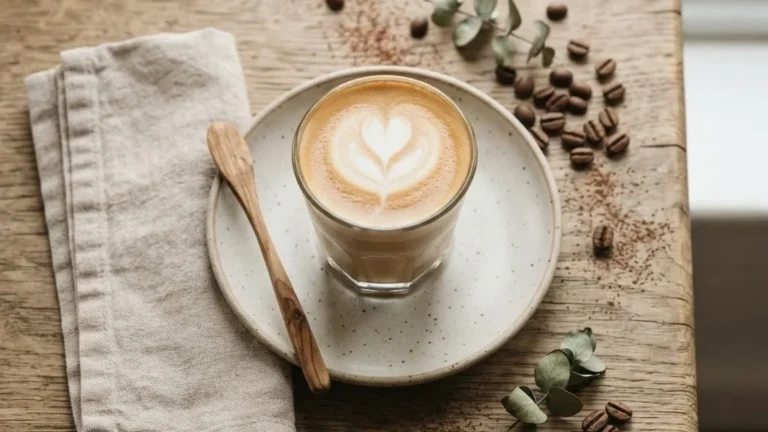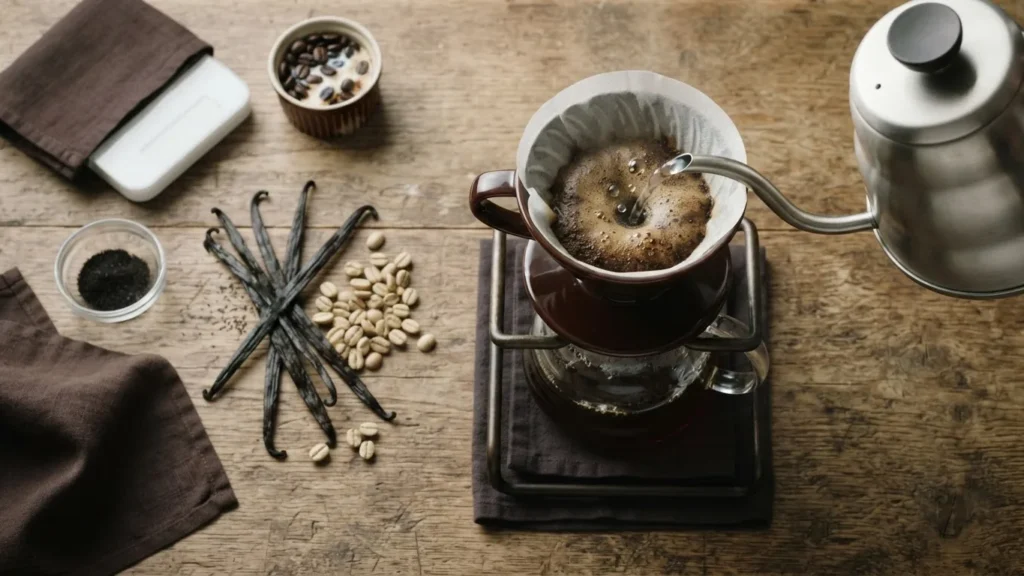
The two words on the bag name a flavoring poured onto roasted coffee, and the beans underneath can be almost anything. French vanilla coffee describes a flavor profile – a sweet, custard-leaning vanilla – applied after roasting, so the name carries no information about the species, the growing region, the roast, or the sugar. Reading the manufacturer pages next to the published extraction research, the real work is separating what the flavor name promises from what a specific product actually contains.
French vanilla coffee is roasted coffee carrying added vanilla-custard flavoring, which means the label settles nothing about the bean, the roast, or the sweetness. The same two words sit on a medium roast and on a light roast, depending on the brand. Sweetness is product-specific: a flavored ground coffee can be sugar-free, while a flavored creamer sold under the same name adds sugar. And no published study fixes a brewing recipe for the flavor itself, so a bag of french vanilla coffee extracts like any roasted coffee at the same grind, dose, and water temperature.
What “French Vanilla” Actually Names on a Coffee Bag
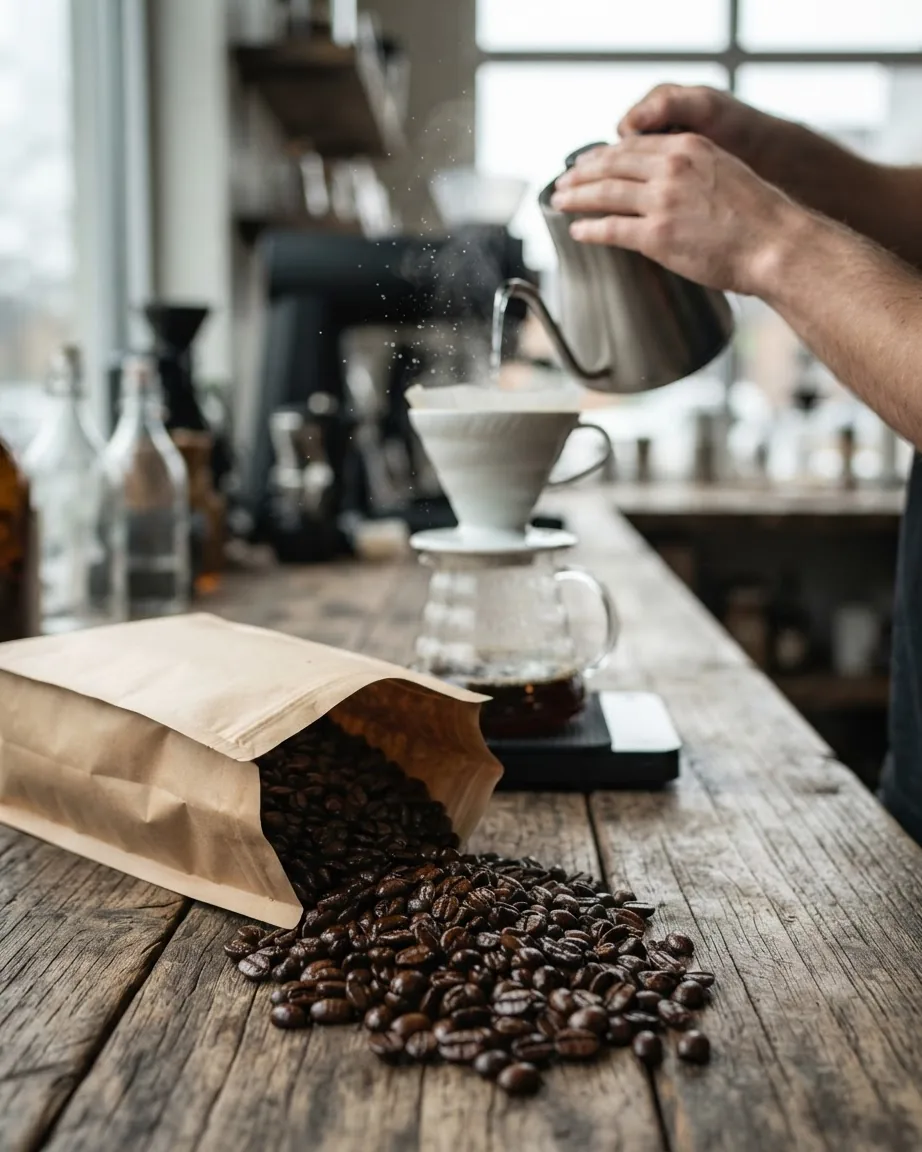
On a coffee bag, “French vanilla” points at a custard-style vanilla – sweeter and rounder than plain vanilla extract – added as flavoring to beans that are already roasted. The coffee underneath is ordinary roasted coffee. Many of these products are built on 100% Arabica and carry a mix of natural and artificial flavors. No food-labeling rule defines the phrase itself, so it works as marketing language rather than a graded standard.
Because the flavor is a coating, not a varietal, the same label can hide very different coffees. A quick label triage beats trusting the name. Three lines decide what you are buying:
- The bean and roast line – Arabica or a blend, and the roast level, which the flavor name never reveals.
- The flavor line – whether the vanilla is natural flavor, artificial flavor, or both.
- The sugar and allergen line – added sugar, and any dairy derivative, which weigh more heavily in creamers than in the coffee itself.
Brands like Top of the Mornin Coffee sell into this same flavored-coffee shelf. The pattern is consistent across the category: roasted coffee plus a flavor system, with the specifics printed on the pack rather than implied by the two words on the front.
Same Name, Different Roast: Medium Versus Light
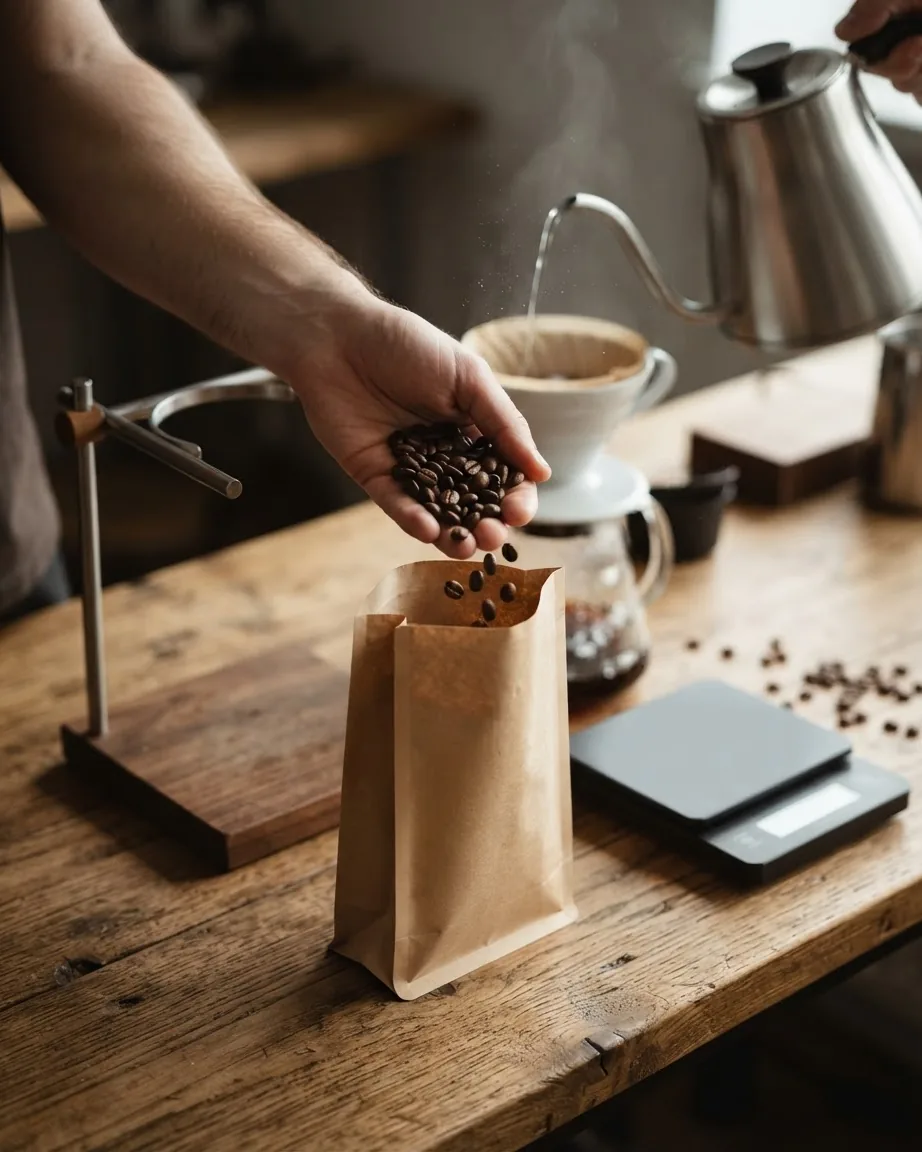
The flavor name hides the roast, and two shelf examples show how far apart they land. The Folger Coffee Company lists its French vanilla ground coffee as a medium roast. A French vanilla K-Cup sold under Keurig’s Green Mountain Coffee Roasters line runs light rather than medium. Same two words, two different base coffees – which changes body, perceived acidity, and how the vanilla reads once brewed.
The buyer decision follows directly: if roast matters to you, read the roast line, not the flavor name. A medium roast gives you more body to carry the vanilla, with a rounder, lower-acid base. A light roast keeps more origin character and brightness underneath the flavoring, so the vanilla sits over a sharper cup. The flavor coating is broadly similar across both, which leaves roast as the variable that actually moves the drink. See also: our dark roast coffee guide.
Sugar: Sugar-Free in the Bag, 5 g in the Creamer
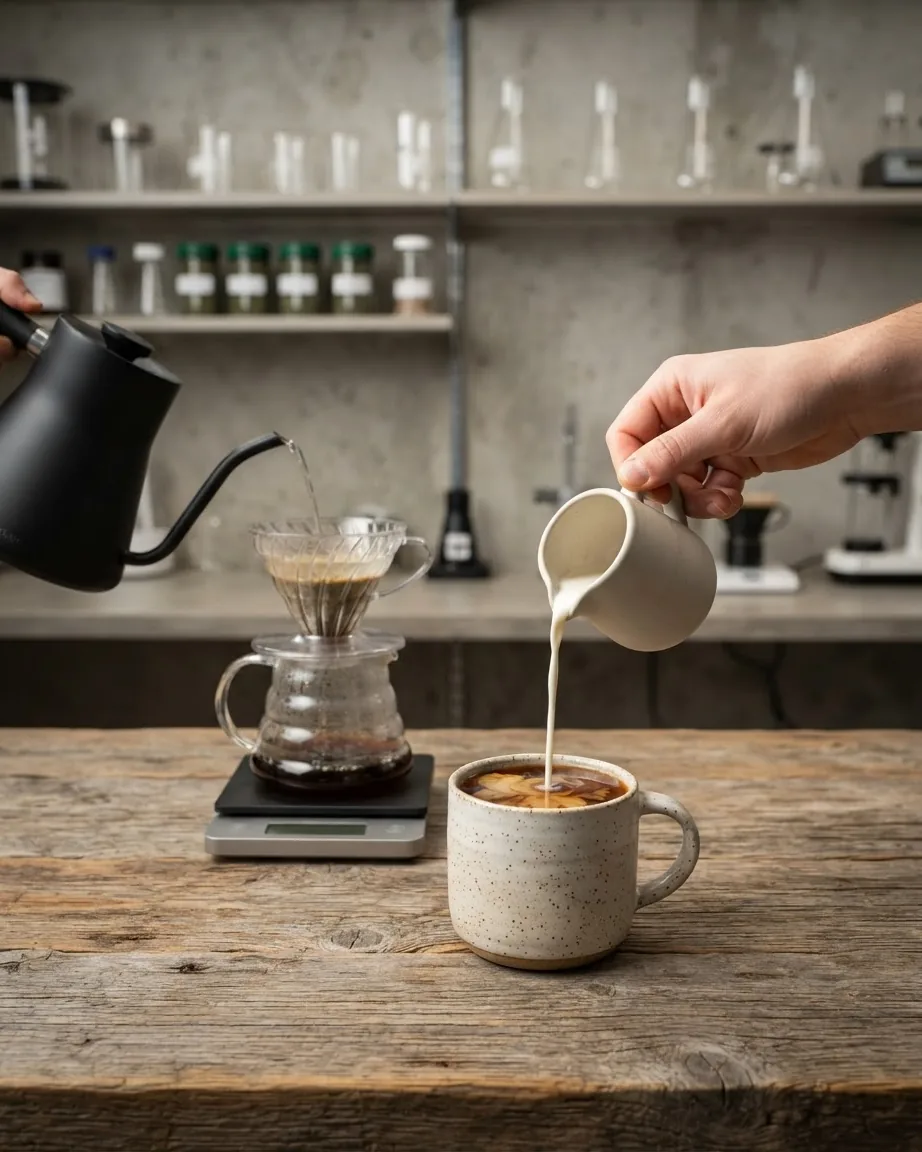
Sweetness is where the French vanilla name misleads most. Folgers states that its French vanilla ground coffee contains no sugar – the flavor is aroma and taste compounds, not sweetener. The sweetness many people associate with the drink comes from what goes in the cup afterward, not from the grounds.
The matching creamer makes this concrete. Pour two or three servings into a mug and the added sugar climbs quickly, even though the coffee you brewed contributed none of it.
So the sweetness decision sits entirely with the add-ins. If you track sugar, the brewed coffee is the safe part; the creamer is where the grams enter. A flavored black coffee gives you the vanilla aroma with no added sugar at all, and sweetening it yourself lets you control the amount rather than inheriting a fixed 5 g per spoonful.
Reading the Flavor Line and the Allergen Line
Federal food-labeling rules, enforced by the U.S. Food and Drug Administration, require a product to declare whether its flavor is natural flavor, artificial flavor, or both, and they govern how a characterizing flavor like vanilla may be named on the front of the pack. That is why a French vanilla coffee spells out “natural and artificial flavors” rather than leaving it vague. The rule tells you the category, not the formula – flavor houses keep the exact compounds proprietary, so the label gives you a class, not a recipe.
Allergen warning
The allergen line carries the real safety stake, and it is easy to misread. A creamer labeled “non-dairy” can still contain a milk derivative – Nestlé’s Coffee mate French Vanilla is exactly this kind of product, where “non-dairy” is a marketing term rather than an allergen clearance. With a milk allergy, rely on the allergen statement, not the front-of-pack wording, and read it on every purchase, because formulations change over time. If you have a reaction after drinking it, stop and check with the manufacturer or a clinician rather than guessing at the cause.
Brewing French Vanilla Coffee: Temperature, Time, and Grind
Here is the honest state of the evidence: no published study sets a grind, temperature, or time specific to French vanilla coffee, and none has tested whether the vanilla flavoring oils change how the coffee extracts. So the working rule is to brew it like any roasted coffee at the same grind and dose, then adjust by taste. Manufacturer guidance exists but is volumetric – Folgers suggests a tablespoon measure per cup rather than a weight – which keeps a home routine consistent but is product guidance, not a research optimum. All of this sits inside the wider set of brewing methods you would use for any coffee.
On water temperature, the most useful numbers come from a controlled drip study published in Scientific Reports, part of the Nature Portfolio. It brewed coffee at three temperatures – 87 °C, 90 °C, and 93 °C – and found limited sensory difference across that band once extraction was held steady. For a home brewer, that means water just off the boil, anywhere in the high-80s to low-90s Celsius, is a sound target, and chasing one exact degree is low-yield effort.
Grind and weight do the heavy lifting instead. Weigh your coffee and water if you want the same cup twice; a scale removes the slack a tablespoon leaves behind. For grind, match it to the method – finer for fast methods, coarser for long steeps – and dial it by result rather than by a flavor-specific number, since none exists. See also: our coffee ground medium guide.
Bloom – the short first pour that wets the grounds and lets trapped carbon dioxide escape before the main pour – is a standard pour-over step, but this research does not pin a bloom duration for flavored coffee, so handle it as a setup step rather than a timed spec. Fresher coffee releases more gas and gains more from it.
When the cup comes out wrong, the fix follows extraction direction:
- Weak, thin, or sour means under-extraction – the water pulled too little. Grind finer, slow the pour or extend contact time, or make sure the water sits in that high-80s-to-low-90s Celsius range rather than cooler.
- Harsh or bitter means over-extraction – the water pulled too much. Grind coarser, shorten the contact time, or bring the water down from the top of that range.
- Flat or muted vanilla usually tracks stale coffee or too small a dose, not temperature; add coffee before you touch the kettle.
Immersion and French Press: Grind Coarseness and Steep Time
Immersion brewing – where the grounds sit in the water the whole time, as in a French press or cold brew – behaves differently from drip, and the temperature window is far wider. A peer-reviewed immersion study in Applied Food Research, published through Elsevier, ran extractions across a broad range, from 4 °C to 37 °C, with steeping times starting around 5 min. That span covers cold brew at refrigerator temperature up through warm immersion, which is why cold-brew French vanilla tastes so different from a hot press: the extraction chemistry is not the same, and the drip-study degrees above do not transfer here.
For immersion, grind coarseness is the control that matters most. Because the coffee steeps for minutes rather than seconds, a fine grind over-extracts and turns bitter, while a coarse grind matched to the steep time keeps the cup clean. Log your steep time and keep it consistent – immersion rewards a repeatable clock more than a precise thermometer. In a French press, the paper filter is optional; the metal mesh does the work, and paper only adds a cleaner, lower-sediment cup if you want one.
If you are brewing without a machine at all, immersion is the natural fallback, since it needs only a vessel, hot or cold water, and time. See also: our coffee without a coffee maker guide.
What the Temperature Study Settles – and What It Leaves Open
That same drip study in Scientific Reports carries two caveats worth more than its headline. First, the one attribute that actually moved with temperature was nutty flavour, which shifted slightly across the 87-to-93 °C band – useful if you are tuning a nuttier blend, minor for most cups. Second, the coffee was served roughly 30 min after brewing, and the study notes that holding effects – coffee kept warm in a vacuum carafe or on a hot plate – are not well documented. So the “temperature barely matters” reading is strongest right at serving, and less certain for coffee that sits.
The larger open question is specific to flavored coffee and unanswered by any of this work: no study has compared a French vanilla coffee against a matched unflavored coffee of the same bean, roast, grind, and dose to see whether the flavoring oils change extraction at all. Until someone runs that test, the defensible position is that the flavoring rides on top of normal extraction rather than rewriting it – which is exactly why the brewing advice here is ordinary-coffee advice, applied to a coffee that happens to smell like vanilla.
Questions Buyers Still Ask
Why is it called “French vanilla”?
The phrase borrows from a custard-style vanilla, richer than plain vanilla extract, and it carried over into coffee as a flavor description. No food-science or regulatory body formally documents how the term moved onto coffee, so read it as a sensory label with marketing history, not a claim about where the beans grew or how dark they were roasted.
Does the vanilla flavoring change how the coffee brews?
No peer-reviewed test compares a flavored bag against a matched unflavored one on the same equipment, so the honest answer is unknown but probably small. Brew it with the grind, dose, and water temperature you would use for the plain version of that roast, then correct by taste if the cup runs weak or bitter. Adjust dose and grind before temperature.
Is a non-dairy French vanilla creamer safe with a milk allergy?
Not automatically. A creamer can read “non-dairy” and still list a milk-derived ingredient, which matters for an allergy rather than a lifestyle preference. Check the allergen statement, not the front label, on every purchase, since products get reformulated. If you react after drinking it, stop and get medical advice rather than assuming the creamer was fine.
Combien de sucre selon le nombre de doses de crème
Le café moulu French Vanilla ne contient aucun sucre ajouté : tout le sucre vient de la crème versée ensuite. En multipliant par le nombre de doses, on voit ce qui entre réellement dans la tasse :
- 2 doses : 5 × 2 = 10 g de sucre ajouté, soit 10 % × 2 = 20 % de la VQ.
- 3 doses : 5 × 3 = 15 g de sucre ajouté, soit 10 % × 3 = 30 % de la VQ.
Autrement dit, trois cuillères couvrent près d’un tiers de l’apport quotidien recommandé en sucre ajouté, alors que le café que tu as préparé n’y a contribué pour rien.