Boil water, pull it off the heat, and wait 30 seconds. Driftaway Coffee puts that single pause at the center of camp brewing because it drops a full boil to roughly 200°F, close to the window where coffee releases solubles without scalding. That one habit decides more about your cup than any gadget. Learning how to make coffee without a coffee maker is mostly a question of matching what sits in your kitchen or your pack to a method and a grind, then keeping water off a rolling boil. This desk compiles manufacturer brew guides and peer-reviewed extraction research into fixed numbers for temperature, grind, and time, and the methods below are built from those sources rather than from a single recipe card.
The short answer: You can make coffee without a coffee maker using a saucepan (cowboy coffee), a makeshift pour-over through a paper or cloth filter, a filterless immersion that mimics a French press, a bag or tea-bag steep, a mesh strainer, or cold brew. For hot methods, boil water and let it rest 30 seconds to reach about 200°F before it touches grounds. Match grind to method: coarse like sea salt for immersion, finer for cowboy. Steep two to five minutes depending on method, and keep grounds away from a hard boil to avoid bitterness.
Match the kitchen tool you already have to a method
The method you should pick is set by one thing: what you can use to separate liquid from grounds. Work from your inventory, not from a wish list.
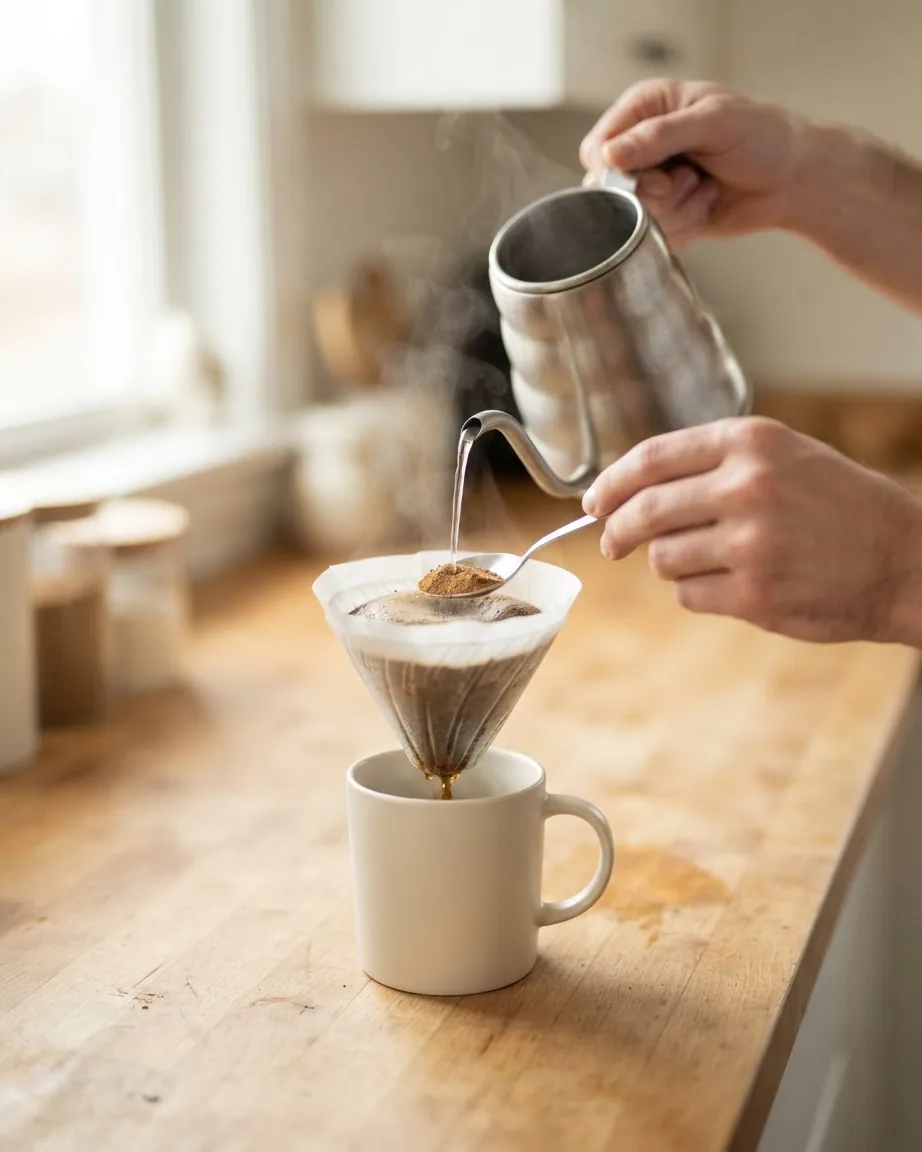
- A paper filter (or a paper towel, clean sock, or cloth): Makeshift pour-over. Set the filter over a mug, add grounds, and pour hot water through in slow passes. Grind medium, roughly sand-like, so water drains at a steady rate instead of racing through or stalling.
- A mesh strainer or fine sieve: Brew in a pot, then pour through the strainer into your cup. A cloth laid inside the sieve catches fines.
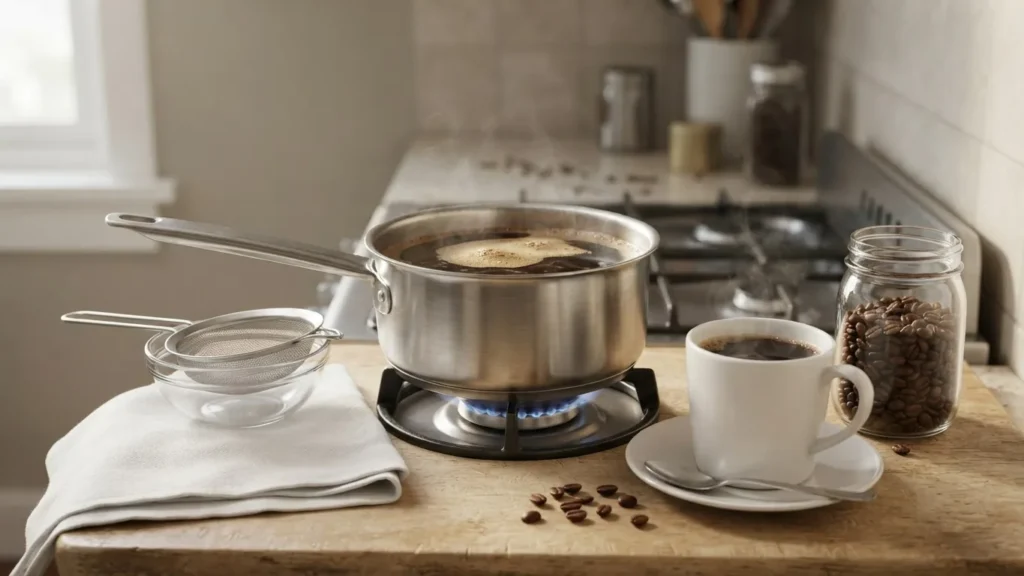
- A saucepan and nothing else: Cowboy coffee. Grounds go straight into the water and settle before you pour.
- A clean jar or bottle, plus time: Cold brew in the refrigerator, no heat and no filter needed until you decant.
Atlas Coffee Club documents the bag method for the in-between case: no filter and no patience for settling. You pack grounds into a tea infuser, an empty tea bag, or a tied square of clean cloth, and steep it like tea.
Cowboy coffee in a saucepan, step by step
This is the base case, and it is citable on its own. Trade Coffee published a weighed version; Driftaway published the camp version. The steps below are the parameters both report.
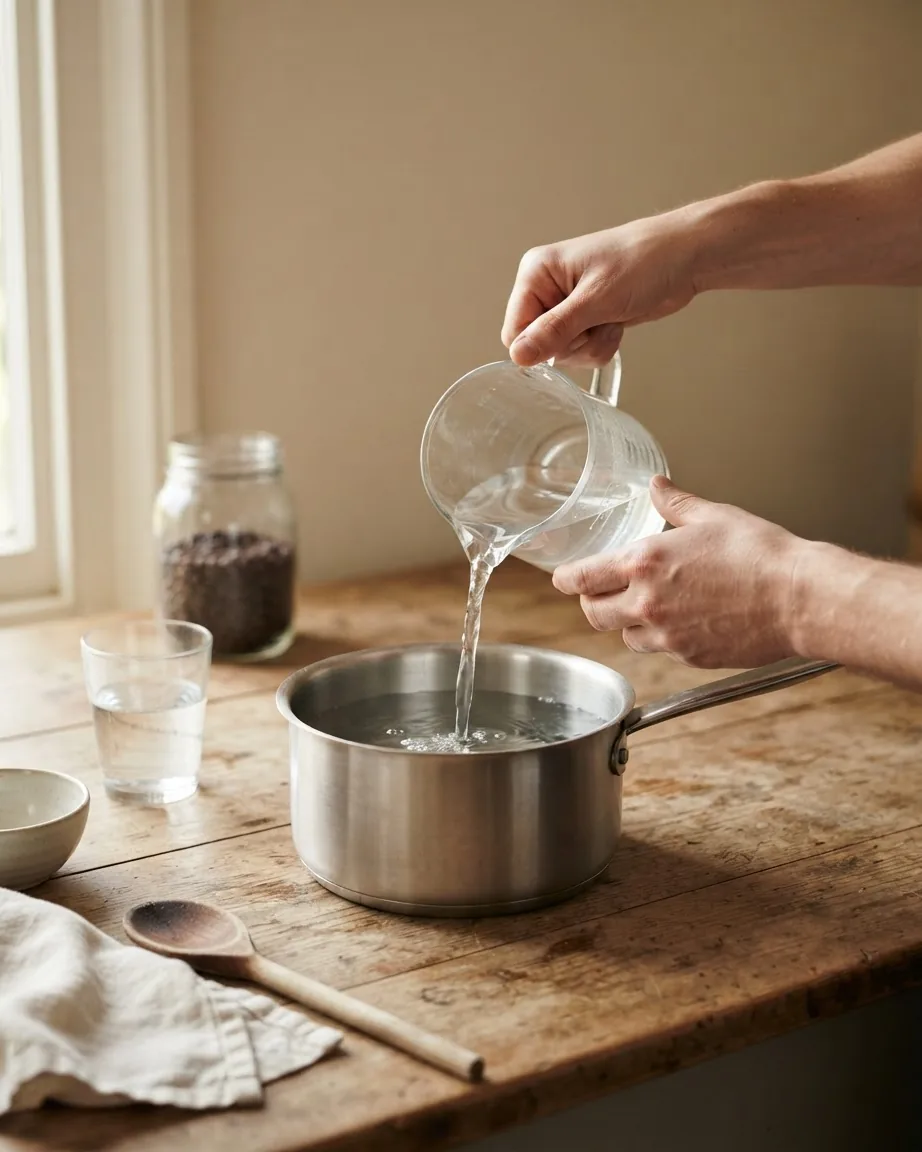
- Measure 1 qt (32 oz or 907 ml) of water into a saucepan or enamel pot, per the recipe Trade Coffee published.
- Boil the water fully, then remove it from the heat.
- Wait 30 seconds. Driftaway notes this lowers the water to about 200°F, which it calls the right temperature for brewing.
- Add the grounds. Trade Coffee uses 2 oz (57 g) of medium-coarse coffee for that quart; Driftaway’s camp ratio is 2 tablespoons of finely ground coffee for every 8 ounces of water.
- Stir once, cover, and let it sit.
- Stir again at the 2-minute mark.
- Stop at a total of 4 minutes of brewing.
- Settle, then pour slowly so the grounds stay in the pot.
Full weighed quantities and the complete walkthrough live in the Trade Coffee cowboy coffee recipe and the Driftaway Coffee guide.
Getting to 200°F without a thermometer
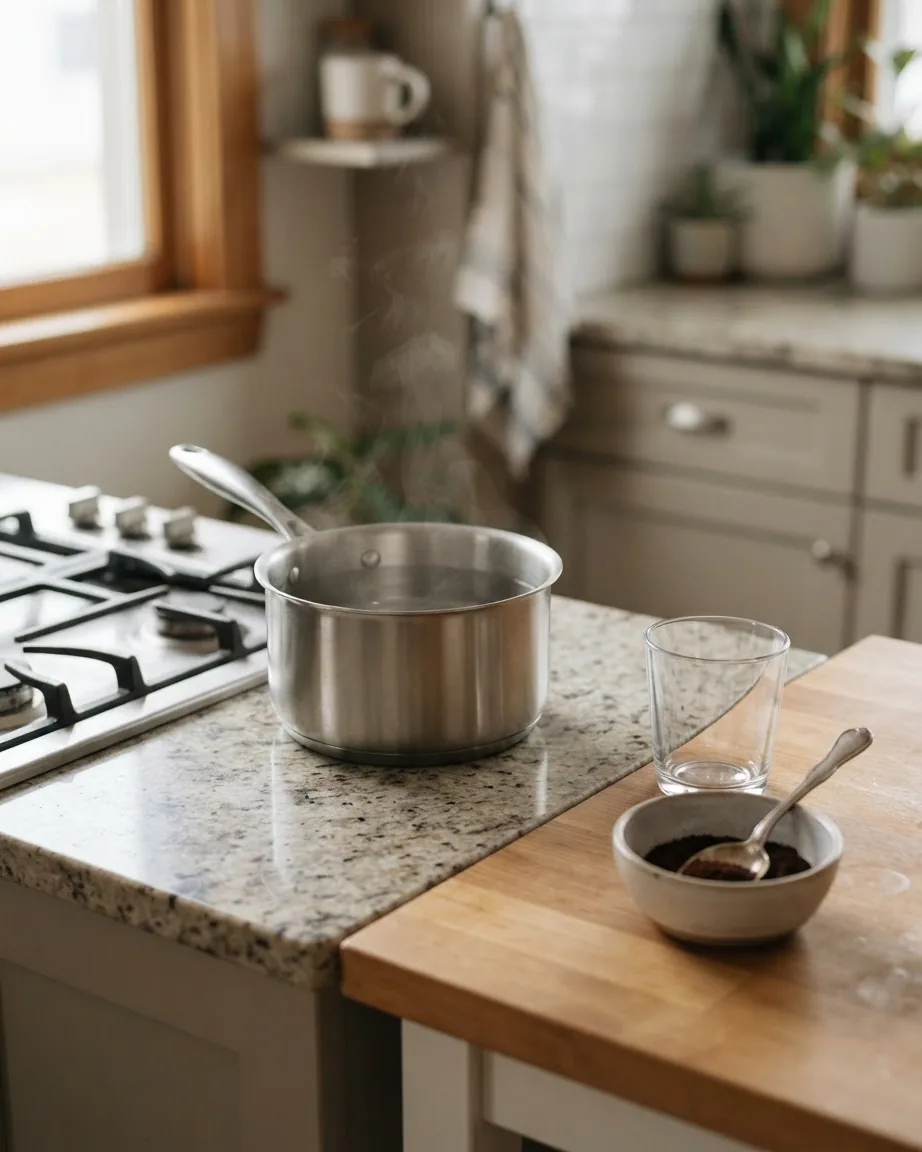
Every hot method shares one target. The National Coffee Association sets the extraction window at 195 to 205°F, warning that colder water gives flat, under-extracted coffee while water that is too hot strips quality. You can read the standard directly from the NCA.
Without a thermometer, the shortcut is a timed rest. Driftaway’s instruction is blunt: boil water and let it stand for 30 seconds. A rolling boil at sea level is 212°F; thirty seconds off the heat brings it down into range. COSORI frames the stakes from the other direction: pouring boiling water at 212°F straight onto grounds is the most common cause of coffee that tastes burnt. The pause is not fussiness. It is the gap between extraction and scorching.
Does exact temperature actually matter when you have no gear?
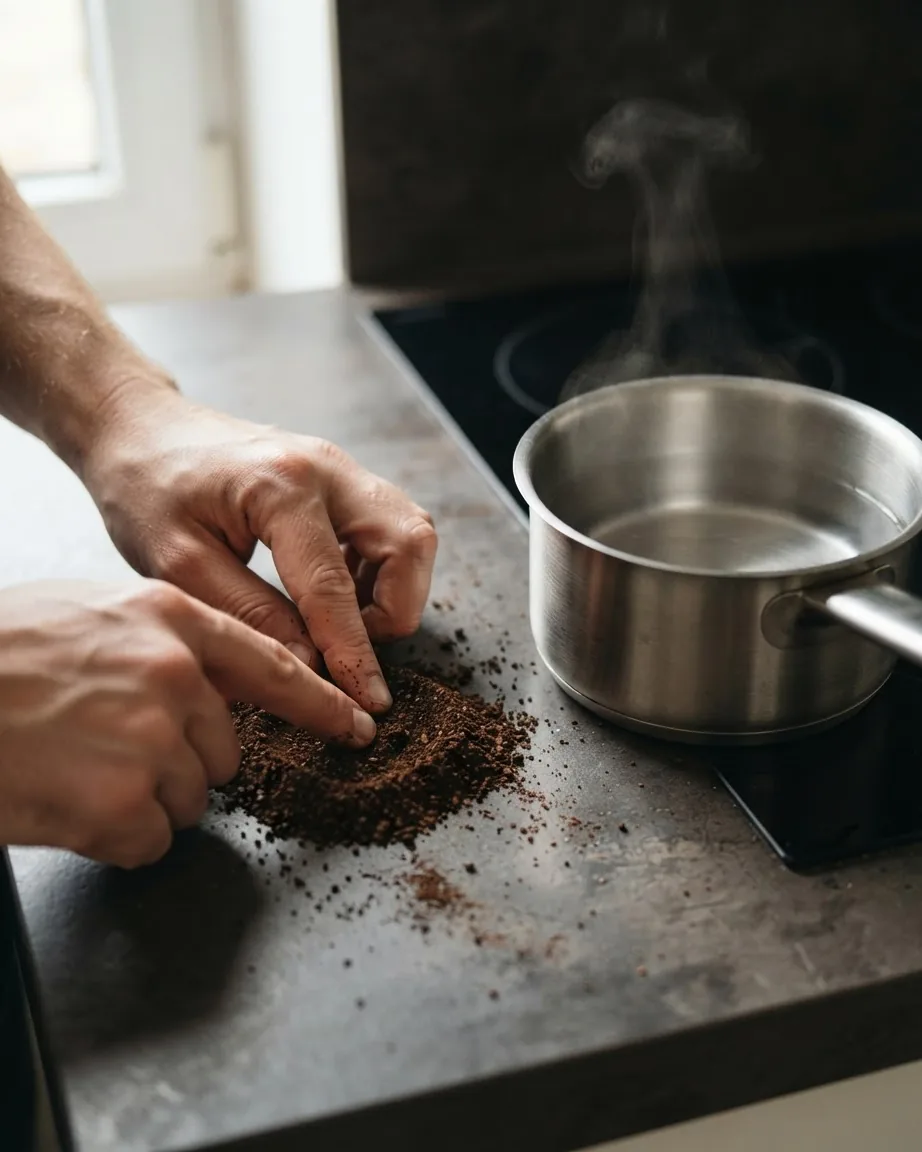
Here the sources pull in two directions, and the resolution is worth more than either number alone.
On one side, the SCA Coffee Brewing Handbook states that a water extraction temperature of 92 – 96°C is necessary for proper extraction. On the other, a controlled sensory study by Batali and colleagues at the UC Davis Coffee Center, published in Scientific Reports, brewed coffee at 87°C, 90°C, and 93°C and concluded that temperature had a negligible impact on perceptible sensory quality once TDS and extraction yield were held constant. Only one attribute, Nutty flavor, showed a slight but statistically significant shift with temperature.
This is not a true contradiction. The study held strength and yield fixed by adjusting grind size and brew time to hit the same target at each temperature. A barista with a scale and a grinder can do that. Someone brewing in a saucepan on a camp stove cannot. The lab removed the variable that gearless brewing cannot control, so for your situation the practical rule stands: aim for roughly 200°F, because you have no way to compensate for a cold brew with a finer grind and a longer pull. One more caveat from the researchers themselves: their coffee was served about 30 min post brew, which may have changed the flavor from what an immediately served cup would show.
Coffee-to-water ratio by method and by unit
Ratio numbers look like they disagree. They do not, because they are stated in different units for different methods. Hold the method and the unit steady before you compare.
- Golden ratio by volume (NCA): one to two tablespoons of ground coffee for every six ounces of water. Good default for pour-over and drip-style brewing.
- Cowboy, by volume: Driftaway’s camp figure is 2 tablespoons of finely ground coffee for every 8 ounces of water.
- Gold Cup, by weight: Methodical Coffee cites the SCA Gold Cup Standard at 1:18 (1 gram of coffee to 18 grams of water), originally stated as 55 grams of coffee per liter of water.
- French press / immersion, by weight: Methodical Coffee recommends a ratio between 1:12 and 1:16, more coffee relative to water than drip.
A kitchen scale accurate to 0.1 g is what lets you use the weight ratios at all; a tablespoon only measures volume, and a scoop of light roast weighs less than the same scoop of dark. Methodical Coffee’s full breakdown by brew style is in its coffee-to-water ratio guide. If you want to build out a proper measurement kit, our equipment section tracks scales by their dwell time, since a scale that takes two seconds to settle ruins a timed pour.
Grind selection: why direction changes by method
There is no single correct grind. Each method extracts differently, so the grind follows the mechanism.
- Makeshift pour-over: medium, sand-like. Water passes through once, so the grind controls flow rate and contact time together.
- Filterless immersion: coarse, resembling sea salt. Driftaway specifies this for the French-press mimic because the grounds sit in water for minutes and fine particles would over-extract and slip through.
- Cowboy coffee: finer, per Driftaway’s camp ratio, because the short contact time and lack of pressure need more surface area.
- Bag or tea-bag: finer than immersion, because grounds packed tight extract slowly.
Grind is also your altitude lever. When a full boil can’t reach the usual temperature, a finer grind recovers extraction without a rolling boil.
The filterless immersion method (French press mimic)
No French press, no filter, no problem. Grind coarse so it resembles sea salt, Driftaway instructs, then combine grounds with water just off the boil in any heatproof vessel and let it stand for 4 minutes. The grounds rise into a crust; break it, wait a moment, and the bulk sinks. Pour slowly off the top, or lay a mesh strainer over your mug to catch the rest. The NCA puts full-immersion contact time at 2 to 4 minutes for a French press and about 5 minutes for drip, which brackets where to stop.
The full technique, including the coarse-grind rationale, is on Driftaway Coffee.
The bag method and why “steep longer” is the wrong fix
The bag method looks foolproof: pack grounds into an infuser or tied cloth and treat it like tea. Atlas Coffee Club’s version douses the grounds in just enough water to soak them, rests them 30 seconds, adds the rest of the water, and steeps about four minutes, longer for a higher caffeine content.
The weakness is hidden in that “longer.” Grounds bound tightly inside a bag stall out, because water can’t circulate through a packed clump. Steeping an extra few minutes mostly over-extracts the outer grounds while the core stays weak. The real fixes are a finer grind and an occasional stir or squeeze to move water through the pack, not more time alone. Atlas Coffee Club’s full method is on its no-coffee-maker guide.
Cold brew: the no-heat method people forget
If you have no heat source at all, you still have coffee. Cold brew skips heat entirely, COSORI explains, extracting flavor through time rather than temperature over 12 to 24 hours in the refrigerator. Methodical Coffee describes the same process: coarsely ground coffee steeped in cold water for an extended period, typically 12 to 24 hours. Grind coarse, combine with cold water in a jar, refrigerate, then strain through a cloth or mesh. The payoff is a low-acid concentrate and zero temperature guesswork, which makes it the most forgiving method on this page. Death Wish Coffee lists it among the gearless options for exactly that reason.
Over-extraction: the one failure mode behind bitter, harsh coffee
Most ruined improvised coffee comes from a single cause stated three ways: too much contact with too-hot water. Pouring boiling water at 212°F directly onto grounds burns them, per COSORI. A rolling boil keeps grounds churning, which is turbulence that over-extracts. Leaving brewed coffee sitting on the grounds keeps pulling bitter compounds long after the good ones are out.
The counter-moves are consistent across methods: rest the water 30 seconds before it touches coffee, never brew at a hard boil, and separate liquid from grounds at the right time instead of letting the pot stew. If a cup tastes harsh or drying, you extracted too long or too hot, not too little.
How altitude bends every number above
Most no-coffee-maker brewing happens outdoors, and that is where the standard temperatures stop holding. East View Coffee Company reports that boiling point drops roughly 1°C for every 300 meters of altitude gain, which it ties to the Scientific Reports findings on temperature. Trade Coffee noticed the same thing in practice: water boils in Denver at 202 degrees, and even lower in the mountains. A full boil at elevation may already sit near the bottom of the brewing window, or below it.
INeedCoffee’s backpacking guide, written by Joe Poerschke, gives the field fix: above 10,000 feet the boiling point falls far enough that you need considerably more coffee grounds to compensate. Since you cannot force the water hotter, you push extraction the other way, with more coffee and a finer grind. See East View Coffee’s water temperature guide for the altitude rate.
The cold-water splash: a settling trick the sources argue about
After the grounds have brewed, how do you clear them from the cup? Two roasters disagree, and the disagreement itself is the useful part.
Driftaway’s method: after a total of 4 minutes of brewing, sprinkle a little cold water on the grounds, which it says genuinely helps them settle to the bottom. INeedCoffee rejects the premise outright, arguing grounds sink when they cool, so adding cold water just makes cold coffee. Trade Coffee partly bridges the two, reporting that a cold splash was added but the boil turbulence seemed to do the settling.
The decision for your situation: splash a little cold water only if settling speed matters more to you than keeping the cup hot, for instance when you are packing up a campsite. If a hot cup matters most, skip the splash and let the grounds sink on their own over about five minutes, lifting the lid briefly to speed it in warm air.
An expert line worth keeping in mind
On why gearless brewers should still respect the temperature window, the researchers behind the UC Davis study are direct about the condition attached to their result: “temperature had a negligible impact on the perceptible sensory quality of the brewed coffee when TDS and PE were kept constant,” they write in Scientific Reports. Read the clause, not just the headline. Keeping TDS and percent extraction constant is precisely the control a saucepan takes away, which is why the 200°F rest earns its place in every method here.
For adjacent reading, see our coffee flights explainer and the General’s Ritual breakdown.
Every ratio in this article, converted to one scale
The four ratios quoted here look like they fight each other only because each is written in a different unit for a different method. Convert them onto one scale and they cluster, which is why no single recipe on this page is wrong – they are all aiming at roughly the same cup.
- SCA Gold Cup checks out against itself: the standard is quoted both as 1:18 and as 55 g of coffee per liter of water. Dividing 1000 ml by 55 g gives 18.2, confirming the stated 1:18 – the two phrasings are the same number.
- The cowboy recipe is stronger than Gold Cup, as expected: Trade Coffee’s 57 g of grounds in 907 ml of water works out to 907 / 57 = 15.9, i.e. about 1:16. That is denser than the 1:18 Gold Cup and sits at the strong end of Methodical Coffee’s 1:12 – 1:16 immersion range – exactly where an unfiltered immersion method should land.
So the practical takeaway: pick the recipe that matches your gear, and trust that a correctly followed cowboy, camp, or Gold Cup ratio all converge near the same 1:16 – 1:18 strength band. The numbers only disagree on paper.
Frequently asked questions
Can I use a paper towel as a coffee filter?
Yes, in a pinch. Fold a clean, unscented paper towel into a cone, seat it over your mug, and pour hot water through in slow passes over a medium grind. It tears more easily than filter paper when soaked, so pour gently and expect a slower drain. A clean cloth or sock works the same way and is reusable after a thorough rinse.
How much coffee do I use if I only have a tablespoon?
Stick to volume ratios, since a tablespoon measures space, not mass. The NCA golden guideline is one to two tablespoons per six ounces of water; Driftaway’s camp figure runs a touch stronger at two tablespoons per eight ounces. Start at the lighter end, taste, and add more next batch. Dark roasts fill a spoon with less weight than light roasts, so lean heavier when using them.
Is cold brew safe to leave on the counter instead of the fridge?
Refrigerate it. Both COSORI and Methodical Coffee specify a 12-to-24-hour steep in the refrigerator, not at room temperature. Cold brew sits wet for far longer than hot methods, and cool temperatures keep that long contact safe while still extracting flavor. Steep it in the fridge, then strain through cloth or mesh and keep the concentrate chilled until you dilute and drink it.
Why does my saucepan coffee taste burnt even at the right ratio?
Almost always heat and turbulence, not dose. A rolling boil keeps grounds churning and over-extracts them, and water poured at 212°F scorches the grounds on contact. Pull the water off the heat, rest it 30 seconds to reach roughly 200°F, and never let the pot return to a hard boil while the coffee sits. Separate the liquid from the grounds once it is done rather than letting it stew.