A tablespoon of dark roast delivers less caffeine than a tablespoon of light roast, but a gram of either delivers nearly the same. That single distinction between measuring by volume and measuring by weight unravels most of the confusion around dark roast coffee. During roasting, caffeine is close to thermally stable, so the molecule itself barely changes. What changes is the bean: it loses mass, loses water, swells, and grows less dense. Scoop by scoop, you are measuring fewer grams of a puffier bean. This guide compiles the measured parameters from peer-reviewed roasting studies and roaster documentation into numbers you can brew against.
Quick answer: Dark roast coffee does not inherently contain less caffeine per gram than lighter roasts, because caffeine survives roasting heat. The apparent gap comes from density: dark beans lose mass, so a scoop holds fewer beans. Measured by weight, caffeine holds steady; one roasting study recorded only a slight dip in soluble caffeine from green to dark. Brew dark roast with cooler water, roughly 196-198°F, a slightly coarser grind, and shorter contact time to avoid pulling out bitterness. Dark beans release gas fast, settling within 1-3 days, so their ideal drinking window opens sooner than lighter roasts.
Why the caffeine-by-roast myth survives: weight versus volume
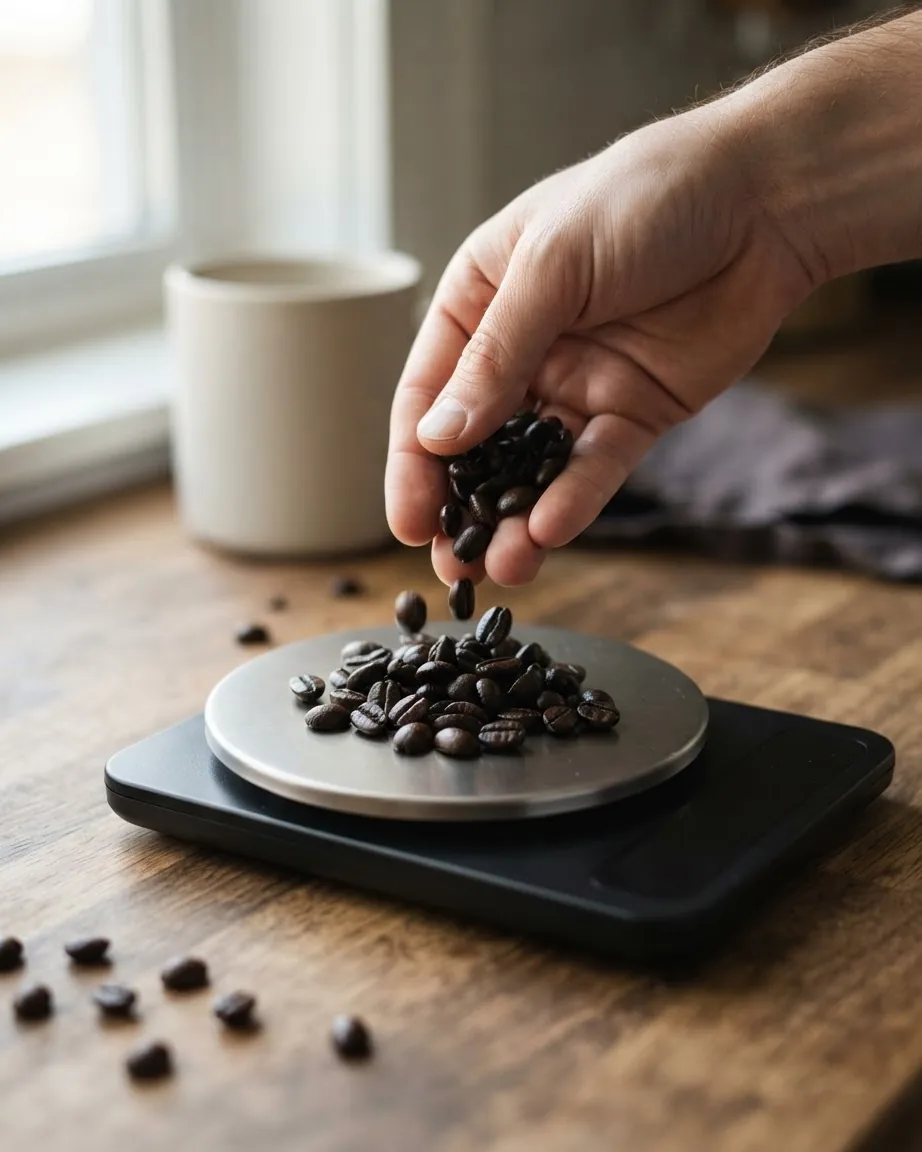
Caffeine withstands roasting temperatures. A roast reaches well above its own figure without destroying the molecule in any meaningful quantity. Hula Daddy Kona Coffee puts a number on the losses that do happen: the amount of caffeine that would sublimate from a roast in 2 minutes is negligible, and the difference in bean temperature between a medium and a dark roast is only about 10 degrees Fahrenheit, across a roast-time difference of roughly 2 minutes. That small thermal gap cannot strip out a stimulant that tolerates far higher heat.
The confusion is a measurement artifact. Dabov Specialty Coffee quantifies the mass loss: a City roast, light-medium, loses about 14-16% of its original mass, while a French roast loses 20-25%. A darker bean is lighter and larger, so a single scoop holds fewer grams of coffee. Measure your dose by volume and dark roast looks weaker; measure by weight and the gap mostly closes.
Healthline’s synthesis shows how this plays out in a single test: one 2018 sample of light roast brewed coffee held about 60 mg of caffeine, while the same amount of dark roast held 51 mg – roughly a 15% difference. Healthline itself flags that figure as possibly a volume or batch effect rather than roast chemistry. When caffeine is isolated by weight, the gap collapses. Read the light versus dark roast comparison for the dietitian-reviewed version of that caveat.
Species outweighs roast by a wide margin. Dabov reports Robusta (Coffea canephora) running 2.0-2.7% caffeine by dry weight against Arabica’s 1.2-1.5%. If the caffeine load of your cup matters, the bean species on the label decides far more than the color of the roast. A dark Arabica will still sit below a light Robusta.
What one roasting study measured from green bean to dark
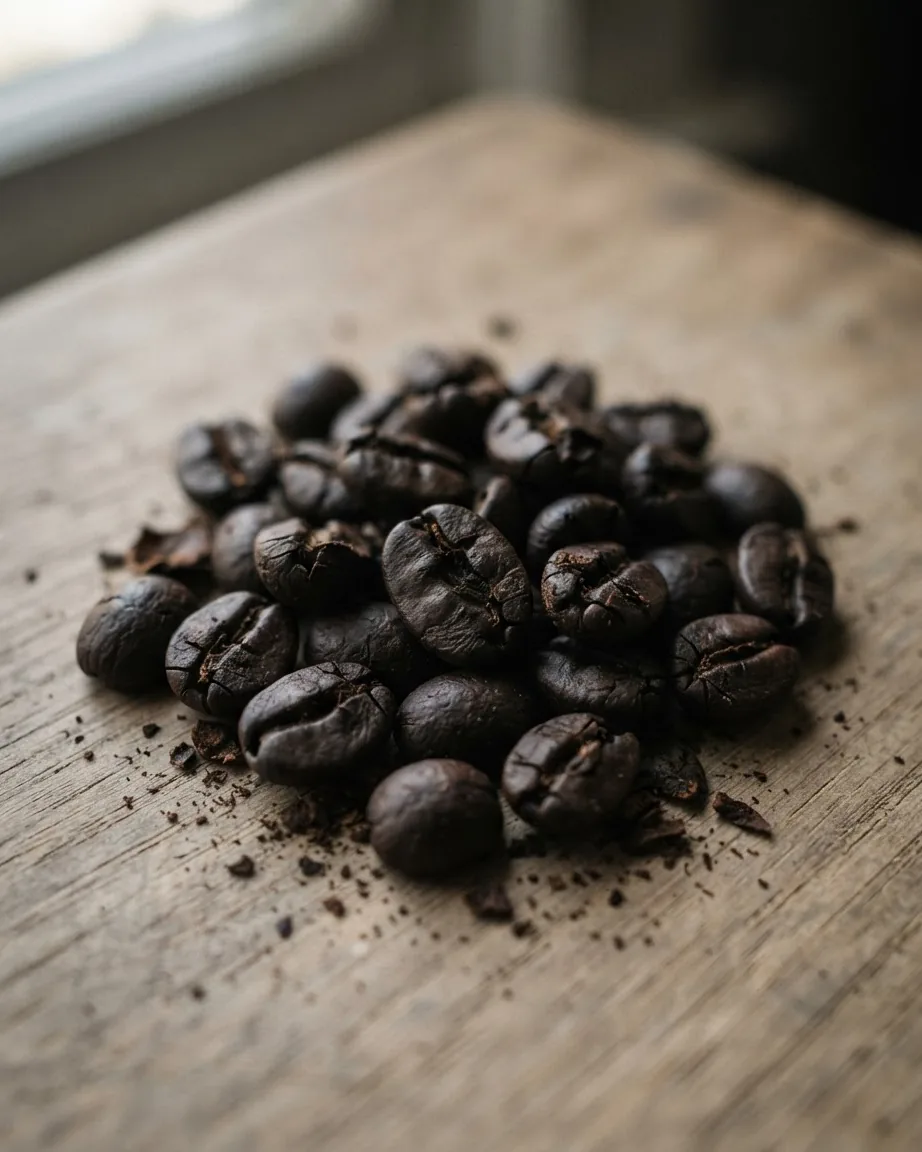
The clearest weight-based numbers come from a study in the Journal of Food Science and Technology, which tracked Lampung Robusta across roast levels. Soluble caffeine in the brew reached 6.54 g/100g of soluble solid in the green bean and decreased only slightly to 5.11 g/100g at the dark level. That is a modest decline measured against soluble solids, not the dramatic loss the volume myth implies.
The same roasting measurement study recorded the physical transformation behind the density shift. Moisture content fell from 11.13 g/100g in the green bean to 0.75 g/100g in the dark-roasted bean. Drive out that much water and fracture the cell walls, and the bean swells while its mass drops – the exact mechanism that makes a scoop misleading.
Two chemistry figures from that work matter for anyone weighing dark roast on health grounds. Chlorogenic acid, specifically 5-CQA, collapsed from 9.84 to 0.54 g/100g with dark roasting, making the green-bean brew 18.2 times higher in 5-CQA than the dark one. Yet antioxidant capacity did not fall nearly as far: the DPPH IC50 of the green-bean brew was only 1.67 times stronger than the dark brew, because melanoidins rose with roasting, reaching 23.26 g/100g in the dark brew against 8.74 g/100g in the green. One antioxidant class leaves, another forms.
Brewing parameters for dark roast coffee: temperature, grind, time
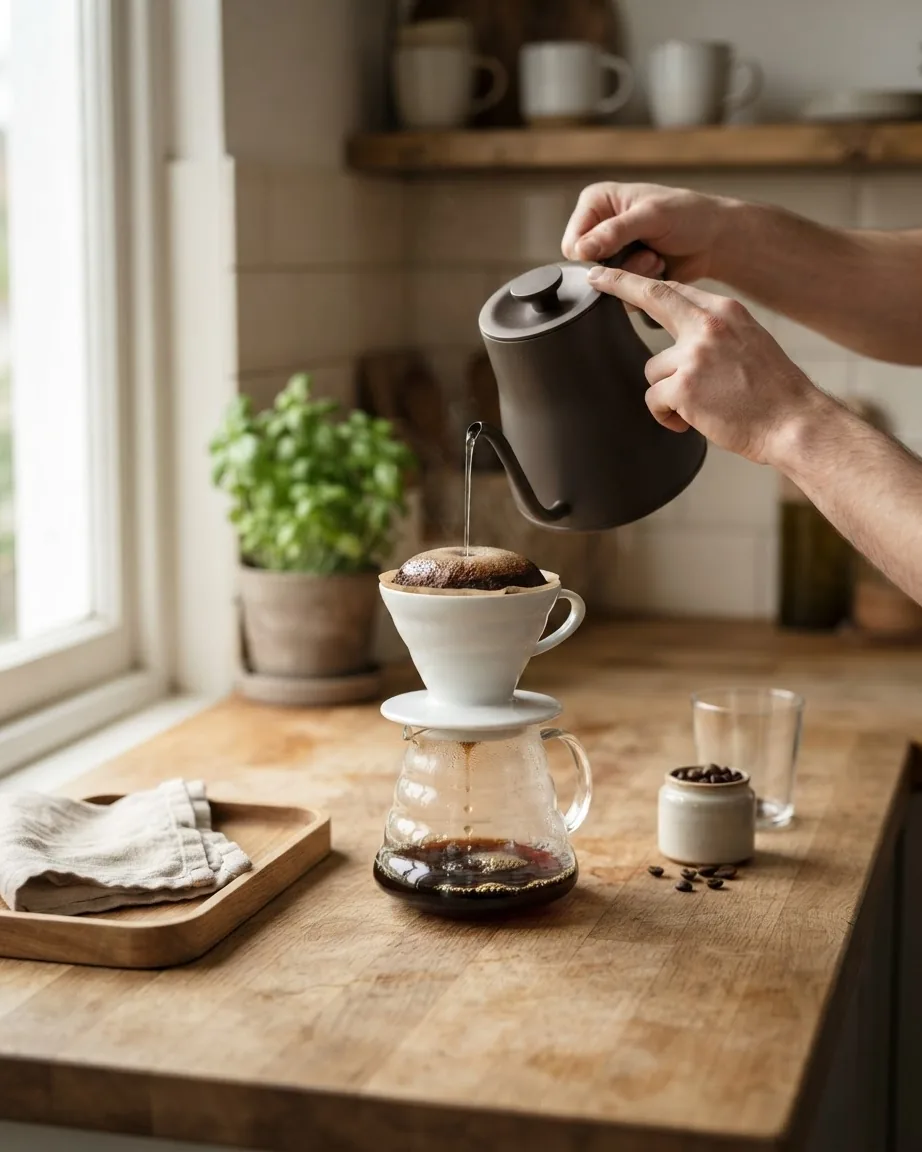
Dark roast coffee is already partly broken down by heat, which is why the standard advice is to extract it gently. Pull too hard and the cup turns ashy and bitter. The levers are water temperature, grind size, and contact time, and the sources converge on cooler and shorter.
Water temperature carries a genuine spread worth naming. Henry’s House of Coffee recommends slightly cooler water, 196-198°F, to avoid harsh flavors. Coopers Coffee Co. lands lower, recommending 87-90°C, which works out to roughly 188-194°F. Both are talking about dark roast specifically, and both sit below the near-boiling range often cited for lighter coffee. The practical read: start around 196°F if your cup leans thin, drop toward the high 180s°F if it tastes scorched. Neither source claims a single correct number, so treat the band between them as your working range rather than a contradiction to resolve.
Contact time depends on method, and here two pages describe different setups. Coopers gives a general recommended brew time of 2:30 to 3:00 minutes to avoid over-extraction. Henry’s House breaks it out by brewer: French press at 3-4 minutes, pour-over at 2-3 minutes, drip at 4-5 minutes, and dark-roast espresso pulling short at about 23-26 seconds. Pick the figure for your device rather than averaging across them.
- Weak, hollow, or sour: extraction is low. Grind finer, raise water temperature within the 188-198°F band, or extend contact time toward the longer end for your brewer.
- Bitter, ashy, or dry-finishing: extraction is high. Grind coarser, pull water back toward the high 180s°F, and shorten contact time – the direction dark roast usually needs.
Dose by weight, not by scoop, and the density problem disappears from your routine entirely. If you brew without standard gear, the sequencing in our coffee without a coffee maker guide still applies at these temperatures.
The degassing window: why dark roast peaks within days, not weeks
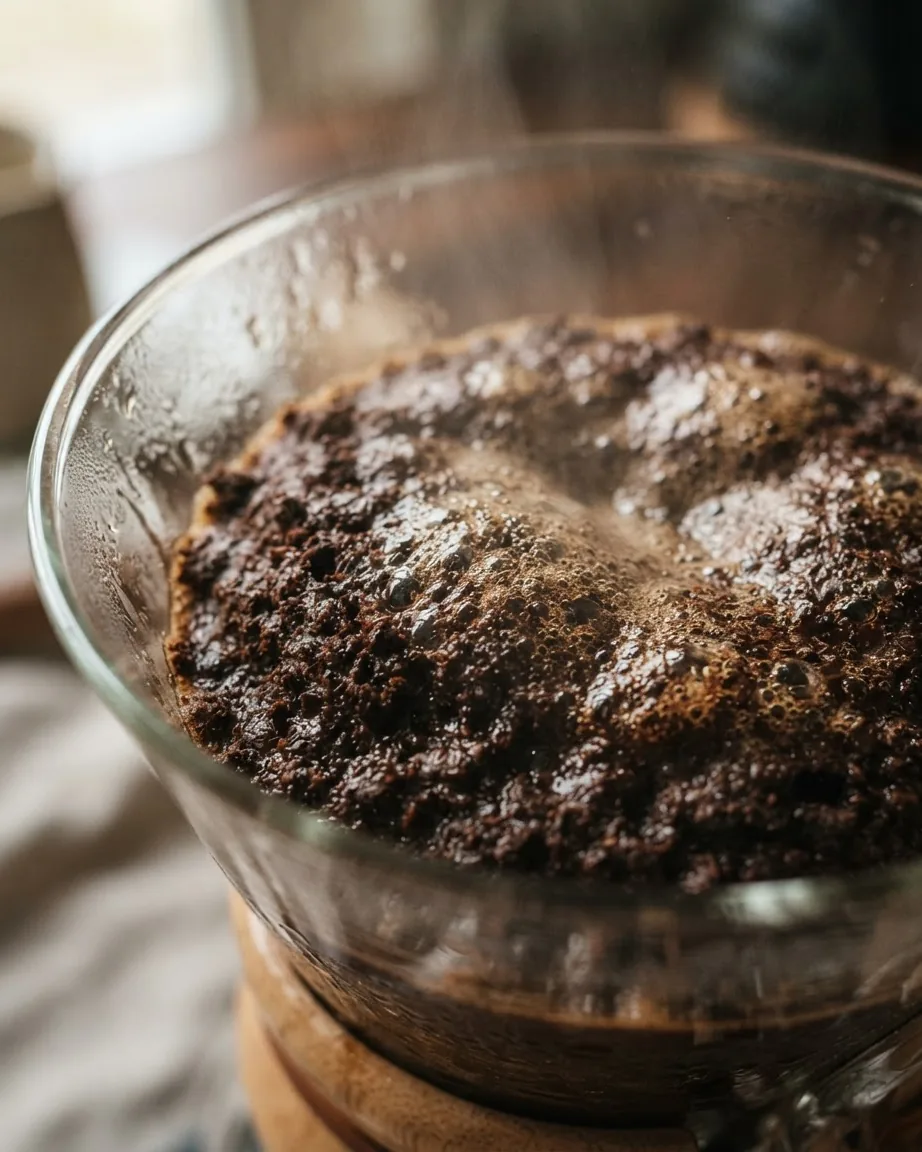
Fresh-roasted coffee releases carbon dioxide, and too much of it disrupts even water contact and makes grounds balloon in the brewer. Henry’s House of Coffee notes that dark roasts degas quickly, within 1-3 days, which smooths the cup sooner than lighter roasts that need longer to settle. That fast release is a direct consequence of how far the roast fractured the bean structure.
The flavor window is separate from the degassing window. Henry’s House recommends using beans within 1-2 weeks of roasting to keep the bold, lively character intact. So a dark roast has a short runway: wait a day or so for the gas to calm, then drink it inside that two-week stretch before the volatile aromatics fade. Buy small and often rather than stockpiling.
Acidity and the stomach: measured pH versus gastric response
“Low acid” means two different things, and conflating them produces bad buying advice. Hula Daddy Kona Coffee is blunt on the first: dark roast does not have less acid than medium roast, because the pH of the brewed coffee is identical. If you are judging perceived sourness in the cup, roast color is not reliably moving the measured pH.
The stomach is a different measurement. A randomized controlled trial published in Molecular Nutrition & Food Research found gastric acid secretion was less effectively stimulated by a dark roast blend than by a standard market blend, at similar caffeine. The dark blend carried N-methylpyridinium (N-MP) at 87 mg/L against 29 mg/L in the medium market blend. N-MP forms during roasting and appears to down-regulate gastric acid, which is a stomach-response mechanism, not a cup-pH one. The gastric secretion trial is the source to cite when someone says dark roast is “easier on the stomach” – the claim is defensible on gastric stimulation, not on acidity measured in the brew.
Hold the two apart. Identical brewed pH and reduced gastric acid stimulation can both be true because they are not measuring the same thing. The roast myth correction settles the pH side; the trial settles the stomach side.
Antioxidants and metabolic markers: what the RCTs reported, by population
The antioxidant picture inverts depending on whether you measure the brew in a lab or the person after drinking it. Raw chemical assays show darker roasting lowers some plant-chemical content, led by that 18.2-fold chlorogenic acid drop. Biomarker studies point the other way.
A separate Molecular Nutrition & Food Research RCT found a dark roast beverage, carrying N-MP at 785 μmol/L and chlorogenic acid at 523 μmol/L against the light roast’s 4538 μmol/L CGA and 56 μmol/L N-MP, raised erythrocyte tocopherol by 41% and total glutathione by 14% over the study period. In-body antioxidant status improved on the dark roast despite its lower chlorogenic acid. That inversion – assay down, biomarker up – is the resolution: a brew’s measured chemistry and a drinker’s measured status answer different questions.
On metabolism, Current Research in Food Science reported that coffee with a high roasting degree decreased serum triglycerides by about 44% after a lipid load. Frame these as study findings tied to their populations, not as dietary instructions: the triglyceride and weight results come from controlled trials in specific groups, and those populations are not interchangeable with the general reader. The roasting-degree metabolic study is a data point, not a prescription.
One question stays open. Whether dark roast carries more or less acrylamide than medium-dark is contested, with some analyses pointing toward more acrylamide at the very darkest levels rather than less. The pack does not carry a confirmed figure to settle it, so the honest position is unresolved rather than a reassurance in either direction.
Roast-stage chemistry: second crack, oils, and development time
Dark territory begins at second crack. Dabov Specialty Coffee places it at 225-230°C, where cell walls fracture more deeply and oils migrate to the bean surface. Those surface oils are why dark beans look glossy – and they double as an age signal. Oil on the bean reads as either over-roasting or old coffee, so a tin of very oily beans is telling you something about either how far it was taken or how long it has sat.
Development-time ratio (DTR) is how roasters describe the stretch after first crack as a share of total roast time. Dabov’s worked example: a 20% DTR on a 10-minute total roast means 2 minutes of post-crack development. For dark roast, the oven numbers run hot – Coopers puts the typical roasting temperature for dark roasts at 464-482°F, and Healthline notes dark roasts are heated for closer to 15 minutes above 400°F (204°C). More time above that threshold is what pushes a bean to the oily, low-moisture dark end.
If precise caffeine per cup is your goal, Dabov offers the clean fix: a scale resolving to 1g costs under $20 and eliminates the density variable entirely. The roast-level caffeine explainer is the source for the DTR framing and the mass-loss percentages. Weighing your dose turns every roast-density argument into a non-issue, because grams do not care how puffy the bean is. For context on reading a shop’s offerings, the coffee flights guide covers that.
The two numbers in this guide hide a third one you have to work out yourself. Dark roast degasses in 1-3 days, and its bold character holds for 1-2 weeks after roasting. Convert the flavor window to days (1-2 weeks = 7-14 days) and subtract the degassing wait, and the window you can actually brew into is tighter than either figure implies on its own.
- Narrowest case: gas takes the full 3 days to calm and flavor fades at the 7-day end → 7 – 3 = 4 usable days.
- Widest case: gas calms in 1 day and flavor holds to 14 days → 14 – 1 = 13 usable days.
So a bag that looks like it has a two-week runway may give you as few as four good days once degassing eats into the front. That is the arithmetic case for buying dark roast small and often instead of stockpiling.
FAQ
Does a lighter roast actually give me more of a caffeine kick?
By the scoop, marginally yes – a volume measure of light roast holds more grams because those beans stay denser. Switch to a kitchen scale and the advantage nearly vanishes. If a stronger jolt is the goal, chase bean species instead: a Robusta at up to 2.7% dry-weight caffeine outruns any Arabica regardless of how it was roasted.
Why does my dark roast taste burnt even at a normal recipe?
You are likely over-extracting a coffee that is already heat-processed. Nudge the grind coarser, drop water toward the high-180s Fahrenheit, and cut seconds off the pour. Ashy, drying finishes signal too much extraction, not too little. Also check the beans: a heavy oil sheen can mean the roast ran past the point where the cup stays clean.
How soon after roasting should I open a bag of dark beans?
Give it a day for the gas rush to ease – these beans vent most of their carbon dioxide inside three days of leaving the roaster, faster than lighter styles. Then drink through the bag while the aromatics last, which the roaster guidance pins at roughly a fortnight from the roast date. Stockpiling months of beans wastes that short peak.
Is dark roast genuinely gentler on the stomach?
On brewed pH, no – a dark and a medium cup measure the same. The stomach story runs through N-methylpyridinium, a compound that builds during roasting and dampened gastric acid output in a trial, with the dark blend hitting 87 mg/L against 29 mg/L. So “gentler” holds for gastric stimulation, not for acidity you can taste or measure in the glass.